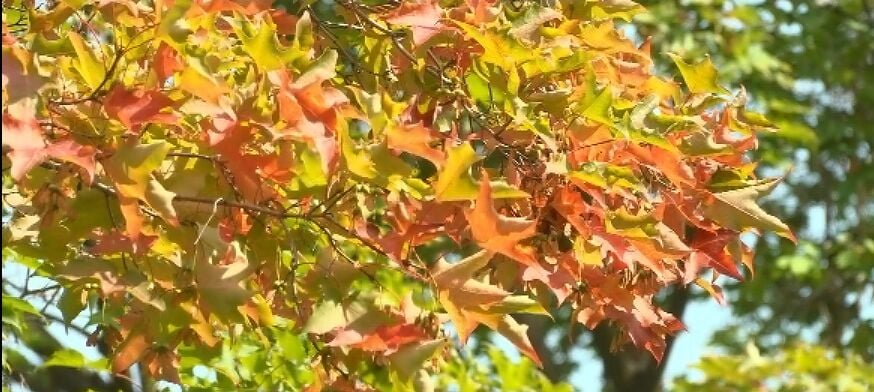
SPOKANE, Wash. — While fall doesn’t officially arrive for another week, some trees across Spokane are already displaying their autumn colors in what arborists describe as an unusual but not alarming early shift.
The early color change stems from two primary factors: reduced daylight and an extended period of intense summer heat. As days grow shorter, trees receive less light, triggering the breakdown of chlorophyll—the pigment that gives leaves their green color and enables trees to convert sunlight into energy. When chlorophyll fades, the natural yellow and orange pigments beneath become visible.
However, the shortened days alone don’t fully explain this year’s early transformation. Tim Kolhauff, an arborist, points to the summer conditions as a significant contributor to the accelerated change.
“A lot of this goes to a really long, hot, dry summer. We had a lot of days without rain and even trees that are regularly irrigated may have suffered just in the heat, and in prolonged heat,” Kolhauff said.
The combination of heat stress and limited water availability has pushed trees to shift their energy reserves earlier than typical, resulting in the premature color display residents are noticing throughout the region.
While the early fall foliage may seem like a minor curiosity now, Kolhauff warns that the real consequences could emerge in spring. Trees that dried out excessively during the summer may lack the energy and nutrients necessary to produce fruit when warmer weather returns.
Fruit trees face particular vulnerability. “What we sometimes call the stone fruits; cherries, plums, apricots, peaches, nectarines—they might be suffering a little bit more because they tend to have a little bit thinner bark,” Kolhauff explained.
The thinner bark on these species provides less protection against heat stress and moisture loss, making them more susceptible to damage during prolonged dry periods.
Despite the concerns, Kolhauff emphasizes that the impact on trees shouldn’t be drastic. However, he notes a troubling long-term trend: as summers continue to grow hotter, early color changes like this year’s may become increasingly common.
“As time goes on and summers get even hotter, this may become the new normal,” Kolhauff said.
COPYRIGHT 2026 BY KXLY. ALL RIGHTS RESERVED. THIS MATERIAL MAY NOT BE PUBLISHED, BROADCAST, REWRITTEN OR REDISTRIBUTED.