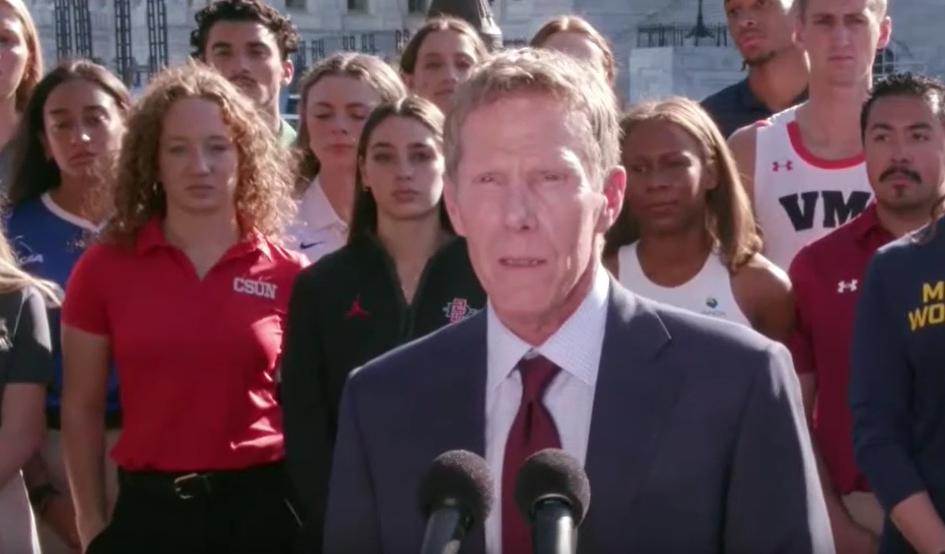
WASHINGTON, D.C. — The U.S. Senate voted 74-24 Tuesday to advance the Protect College Sports Act toward a final vote. The bipartisan bill would establish the first federal protections for student athletes and create a national framework for name, image and likeness (NIL) compensation.
The legislation guarantees scholarships for 10 years after eligibility ends, ensuring athletes can complete their degrees even if injured. Athletic staff cannot pressure students about their choice of major. The bill caps agent fees at 5 percent and prohibits agents from misleading athletes about NIL deals.
Schools would be required to cover out-of-pocket medical costs for athletic injuries and illness for current student athletes. The legislation mandates safety standards for heat exertion, brain injury, sickle cell trait and asthma. For five years after eligibility ends, Division I schools must cover sports-related injury costs. The bill creates a medical trust fund of $60 million to $100 million annually to help schools provide post-eligibility medical coverage.
The bill establishes a $22.5 million retention fund, which could reach $27.5 million if schools pay athletes in non-revenue sports, to flow directly from schools to student athletes. Student athletes gain a new federal right to earn compensation for their name, image and likeness, replacing varying state laws with a national standard.
The bill prevents women’s and Olympic sports from being cut by requiring schools to maintain a minimum number of sports. Schools generating $80 million or more in athletic department revenue must maintain the same roster spots and grant-in-aid for non-revenue sports as they did in 2024-2025.
The bill allows athletes to transfer once without sitting out a year and provides five years of eligibility with exceptions for serious injury. It prevents football coaches from leaving mid-season to take over another FBS program. The legislation requires at least one-third of athletic association governing boards to include current or recent former student athletes and creates an Office of Athlete Ombudsman at the NCAA.
The bill amends the Sports Broadcasting Act of 1961 to allow schools to pool and jointly negotiate media rights, similar to the NFL, NBA and NHL. Every football and basketball game must be available on a non-exclusive basis to at least one free TV local outlet in each school’s home market. If passed by the Senate, the legislation moves to the House of Representatives.
COPYRIGHT 2026 BY KXLY. ALL RIGHTS RESERVED. THIS MATERIAL MAY NOT BE PUBLISHED, BROADCAST, REWRITTEN OR REDISTRIBUTED.