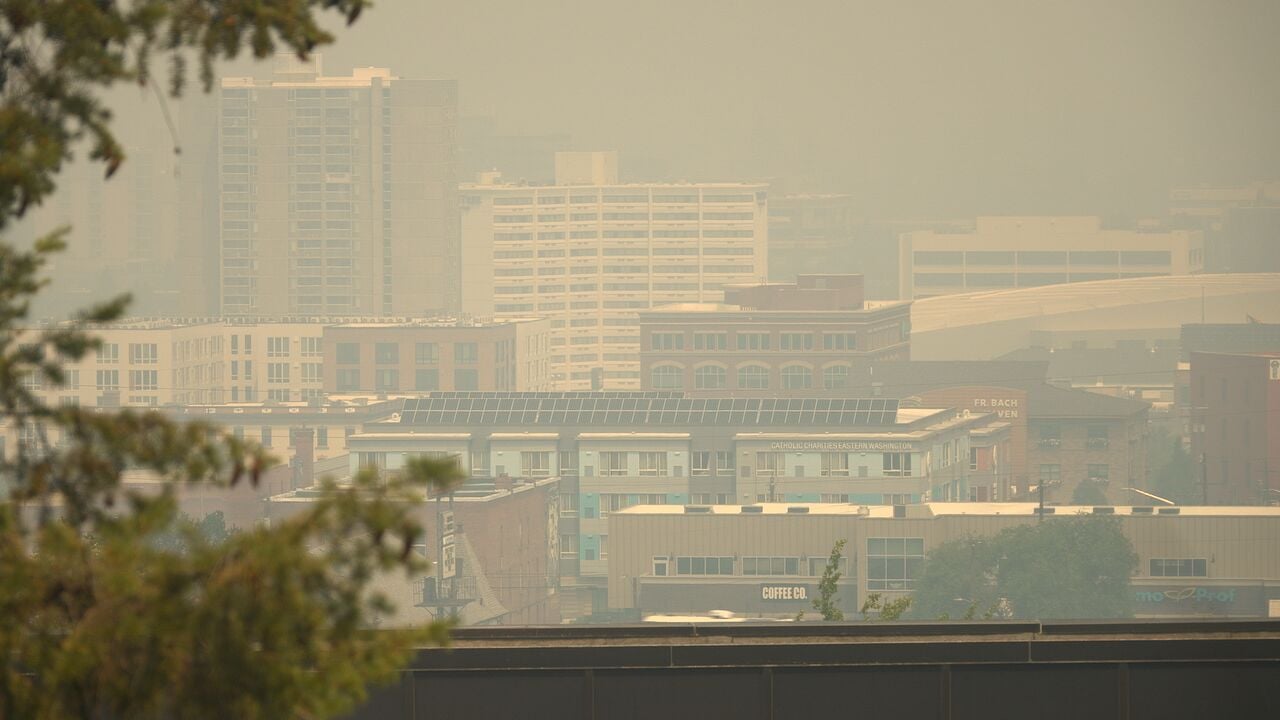
SPOKANE, WASH. — Wildfire smoke blanketing the region could create significant health hazards for both residents and their pets, according to health officials and animal care professionals.
The smoky air contains tiny particles known as PM 2.5 that can penetrate deep into your lungs and bloodstream, triggering a range of health problems. Medical professionals warn that exposure may cause coughing, irritated sinuses, stinging eyes, and shortness of breath.
While these symptoms are concerning, more severe reactions demand immediate medical attention. Anyone experiencing chest pain or a rapid heartbeat should contact a doctor right away.
Dan Getz, Providence’s Chief Medical Officer, emphasized the importance of protection during periods of heavy smoke. “When we’re at this degree of smokiness, really nobody is safe outside,” Getz said. “So, making sure that if you’re forced to go outside you have some degree of protection; a K-N-95 mask really goes a long way toward that. Um, if you’re stuck at home make sure your windows are closed, check your air filters and change them if they need cleaning.”
Who is most at risk?
Certain populations face heightened vulnerability to smoke-related health issues. Children under age eight, adults over 65, pregnant women, and people with preexisting health conditions are at greatest risk from poor air quality.
Health officials stress that these groups should take extra precautions to minimize outdoor exposure during periods of heavy smoke.
Protecting your pets
The health threat extends beyond humans. Pets can suffer serious respiratory problems from wildfire smoke, and animal care professionals are urging owners to adjust their routines accordingly.
Dori Peck, Executive Director of Spokanimal, stressed the importance of limiting outdoor activities for dogs. “We ask that people please, please with your dogs, please make sure out for a potty break, then inside. No running, no you know severe exercise where their respiratory is just going to skyrocket their heart rate,” Peck said.
Pet owners should keep their animals indoors, even if they normally spend time outside. When bathroom breaks are necessary, owners should keep them brief—just a few minutes—to minimize smoke exposure.
Resources available
Spokanimal is available to answer community questions about keeping pets healthy during poor air quality events. The organization is also prepared to take in any animals displaced by ongoing fires in the region.
Peck emphasized the organization’s commitment to helping residents during this challenging time. “We want to be a part of the community and help that way because its traumatizing when people are evacuating and its really hard,” Peck said.
During the coming days, residents should focus on staying indoors, monitoring for smoke-related symptoms, wearing appropriate masks when venturing outside, and keeping loved ones—both human and animal—safely at home.
COPYRIGHT 2026 BY KXLY. ALL RIGHTS RESERVED. THIS MATERIAL MAY NOT BE PUBLISHED, BROADCAST, REWRITTEN OR REDISTRIBUTED.