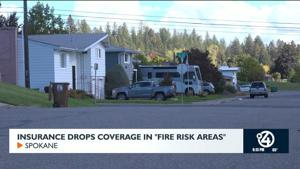
SPOKANE, Wash – Hundreds of Spokane-area homeowners have lost their insurance coverage in recent years, and the threat of more cancellations looms as wildfire seasons intensify across the region.
The cancellations stem from insurance companies’ assessment of wildfire risk in specific neighborhoods. Over the past five years, more than half of Washington homeowners have been dropped by their insurers, according to data from Washington’s Insurance Commissioner Patty Kuderer’s office.
In Spokane County, the three most impacted zip codes are: 99205, which covers areas south of Francis and west of Division extending to the river, has seen the most cancellations with 618 homeowners losing coverage. The 99208 zip code, which includes much of the area burned in recent Spokane fires and where residents were evacuated, accounts for 469 cancellations. The 99207 zip code, north of downtown and east of Division, saw 457 homeowners dropped.
People who responded to a social media post in which we asked about personal experiences with insurance non-renewals or cancellations. We received hundreds of comments describing the shock of losing long-term coverage or being gouged by much higher premiums. One homeowner in Indian Trail said she was notified by her insurance company of 12 years that it would not renew her policy because her home was in a high wildfire risk area. Though her home was spared in the Old Trails fire, she was forced to find new insurance at a significantly higher price with a much higher deductible.
Another Spokane resident in the Northwoods area received a non-renewal notice in June 2023, citing wildfire risk as the reason — before the Upriver fire occurred. He now worries his new insurance company will drop him as well.
A third homeowner reported being dropped two years ago because she lived in a zip code designated as a fire zone.
Insurance companies don’t calculate wildfire risk independently. Instead, they purchase risk assessment metrics from third-party companies that combine many data points, from historical fired, weather patterns, and satellite imagery to create risk scores for individual properties. These scores determine how much insurers charge for coverage or whether they will insure a property at all.
“The companies have their own ways of determining risk and what they want to underwrite. They look at the risk differently,” Kuderer said. “My concern about what’s happened in Spokane is that there will be an increased perception of the risk, which will make insurers less inclined to write in the market.”
The state cannot force insurance companies to cover properties. Washington offers options for homeowners who lose coverage. The state maintains what’s called a “fair plan” — an insurer of last resort that provides bare-bones coverage to give homeowners time to find alternative insurance.
“We have right now about 400 policyholders on the fair plan,” Kuderer said. “The good news is that most people on the fair plan are only there for 60 to 90 days before they can find coverage elsewhere.”
Homeowners can take steps to make their properties more attractive to insurance companies. Kuderer’s office administers a “Wildfire-Prepared Home” program that certifies properties meeting industry standards for fire prevention.
“It’s a set of industry best standards for clearing around your house and hardening your home with noncombustible building materials that shows insurance companies that you’ve done everything you can to make your home more resilient against wildfire,” Kuderer said.
The Insurance Commissioner’s office is also pushing for passage of a state grant program called Strengthen Washington Homes, which would provide funding to help residents in high-risk wildfire areas make protective improvements to their properties.
While Spokane County has been significantly impacted by insurance cancellations, it is not the most affected region in Washington. The top three areas with the highest rates of non-renewals and cancellations are Springdale and Clayton in Stevens County and Inchelium in Ferry County.
For homeowners facing the loss of their safety net, the path forward requires both individual action and state support to ensure coverage remains available in fire-prone areas.
COPYRIGHT 2026 BY KXLY. ALL RIGHTS RESERVED. THIS MATERIAL MAY NOT BE PUBLISHED, BROADCAST, REWRITTEN OR REDISTRIBUTED.