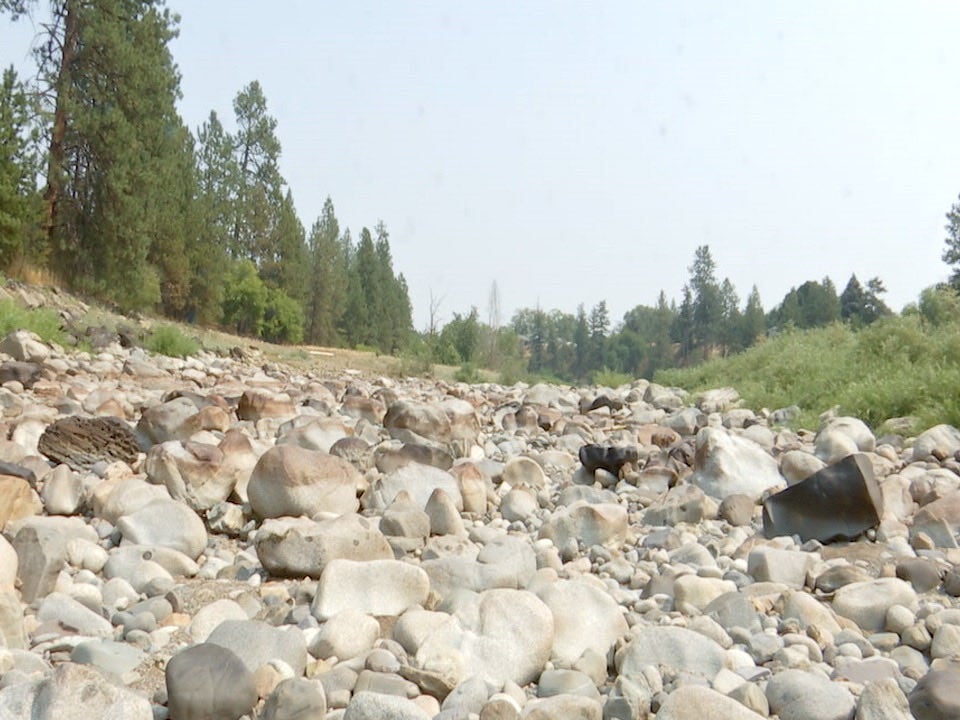
SPOKANE — For the second consecutive year, a section of the Spokane River has run dry, raising environmental concerns about the health of the waterway that flows through the region.
The dry stretch extends approximately a mile and a half downstream from Barker Road in Spokane Valley.
Jule Schultz, waterkeeper with the Spokane Riverkeeper, an environmental nonprofit organization, said the dry river section represents a broader environmental challenge facing Spokane.
“These issues are sort of the canary in the coal mine when it comes to our ecosystem and obviously the tragedy that we’ve had here in Spokane with fires. We’re starting to see the effects of our climate changing,” Schultz said.
Joe Gilbert, an adjunct instructor in water science at Spokane Community College, said water flows fluctuate, but he has observed them declining recently.
“It’s a disaster for aquatic habitats — invertebrates, fish, recreation,” Gilbert said.
Multiple factors contribute to the low water levels in this section of the river. The Spokane Riverkeeper notes this stretch of the river is where water can be lost into the aquifer when levels are low. The Post Falls Dam also plays a significant role in determining water levels.
This week, Avista reduced the flow of water released out of the dam. The company has to do this to comply with rules outlined by the Federal Energy Regulatory Commission. It must reduce the flow when water levels in Lake Coeur d’Alene drop below certain thresholds.
“The health of the river matters to us not only as a utility, but as members of this community,” Director of Environmental Affairs Jillian Caires said in a statement from Avista. “We live here, we enjoy the river with our families, and we want to see it remain healthy for generations to come.”
The company indicated that water flows from the dam will increase on the first Tuesday after Labor Day.
Schultz remains concerned about the impact in the meantime.
“This represents our community. This is a place to play, to recreate, to come down to, to hang out, to commune with nature,” Schultz said. “And it’s not here anymore.”
COPYRIGHT 2026 BY KXLY. ALL RIGHTS RESERVED. THIS MATERIAL MAY NOT BE PUBLISHED, BROADCAST, REWRITTEN OR REDISTRIBUTED.