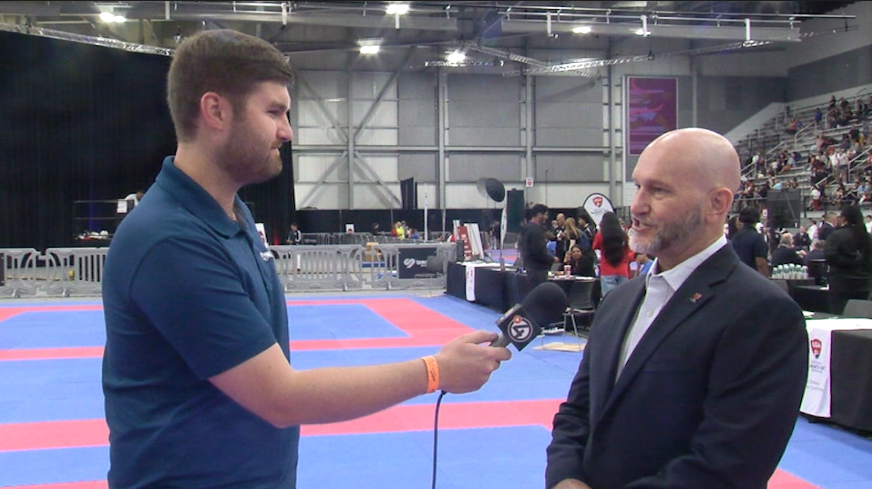
SPOKANE, Wash. – Today marks day three of the USA Karate National Championships in Spokane’s The Podium. We met in a one-on-one interview with Dustin Baldis, head coach of the USA Kumite program, leading the fighting style of karate versus kata, the choreographed style.
JACK WALLACE: Talk about the feeling of seeing just this many people all around here for an event like this, and here in Spokane to see that support.
DUSTIN BALDIS: “It’s awesome. It’s an awesome feeling for everybody to be out here. They work hard. They work many, many months to get to this point. And now it’s just about going out there and putting on a show for everyone.”
JW: Talked to Tom [Scott] a couple of days ago about his time as an Olympian and being able to bring that sport to the world stage on an even higher level in Tokyo. Talk about the effort of events like these and how they can eventually get karate back to the Olympics.
DB: Well, with the non-elite divisions, it’s all about developmental, and it’s all a process, and you can’t just expect to be the champion right from the top. You’re going to have your ups and downs, and you’ve got to keep pushing through and persevere, and eventually you get to be the person that’s on top. And working with the U.S. team and competing all over the world at major events.
JW: When you see a lot of these kids or even adults out here competing, what traits do you see in the champions that separate them from the other gifted people here?
DB: It’s a matter of just growing from the losses and even growing from the wins. You can’t just stay complacent. You have to work hard. You have to make the necessary adjustments, and you got to move forward with what you need to do to improve.
JW: And when having people who are interested in karate or interested even in martial arts, what would you tell them, even if they have no experience, what would convince them to come here and take part in karate versus any other martial art or even any other sport?
DB: Karate, it’s not boxing, it’s not judo, it’s not taekwondo. It’s everything. It has the hands, it has the feet, it has the throws. So, karate is also a journey. It’s so you don’t want to just look at it as the sport aspect of it, because once the sport aspect of it is done, you still can do karate the rest of your life. So it’s one of those things that embodies the whole mind-physicality of it and the mental part of it as well.
COPYRIGHT 2026 BY KXLY. ALL RIGHTS RESERVED. THIS MATERIAL MAY NOT BE PUBLISHED, BROADCAST, REWRITTEN OR REDISTRIBUTED.