The COVID-19 pandemic affected nearly everyone, and for many people it never fully ended. The CDC estimates 77% of Americans have contracted COVID-19, some multiple times.
For North Spokane mom Dawn Keck, the virus still has a daily impact. Keck believes she first got COVID in January 2021 after it spread through her family. She says her mother-in-law and father-in-law both died of COVID that same month.
Keck had COVID three times within about a year and a half. Although she remains active—hiking and doing CrossFit—she says she continues to struggle with Long COVID symptoms, including fatigue, brain fog, and word-finding issues.
Keck described moments of disorientation and memory loss during her recovery. She also dealt with smell and taste changes for months. “I smelled rotten flesh for almost a year,” she said.
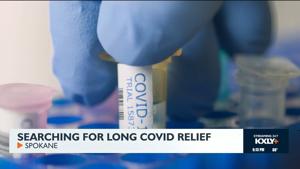
Looking for answers, Keck enrolled in a four-year research study supported by the National Institutes of Health (NIH). She says she wanted to better understand how a virus can cause long-term complications—and whether that knowledge could lead to real solutions.
Providence’s executive director of research, Dr. Katherine Tuttle, says Providence Sacred Heart was part of that study and has joined the second phase of NIH’s long COVID research efforts. Tuttle says early data from the first phase identified three major symptom patterns, often referred to as “phenotypes,” that can overlap:
Neurologic impacts such as brain fog and depressionCardiovascular, kidney, and metabolic complicationsPOTS (postural orthostatic tachycardia syndrome), which Tuttle says can be especially disabling for some patients
Nationally, the study includes about 15,000 volunteers. Tuttle says roughly 100 participants are in Spokane, with a range of symptoms and severity.
Researchers expect the study to continue through 2030, with the goal of identifying mechanisms behind Long COVID and developing effective treatments. Tuttle says antiviral therapies have not shown the same success for long COVID as they have for acute COVID. She notes researchers are watching a number of other treatments, including a GLP-1 trial that may show promise for certain patients.
COPYRIGHT 2026 BY KXLY. ALL RIGHTS RESERVED. THIS MATERIAL MAY NOT BE PUBLISHED, BROADCAST, REWRITTEN OR REDISTRIBUTED.