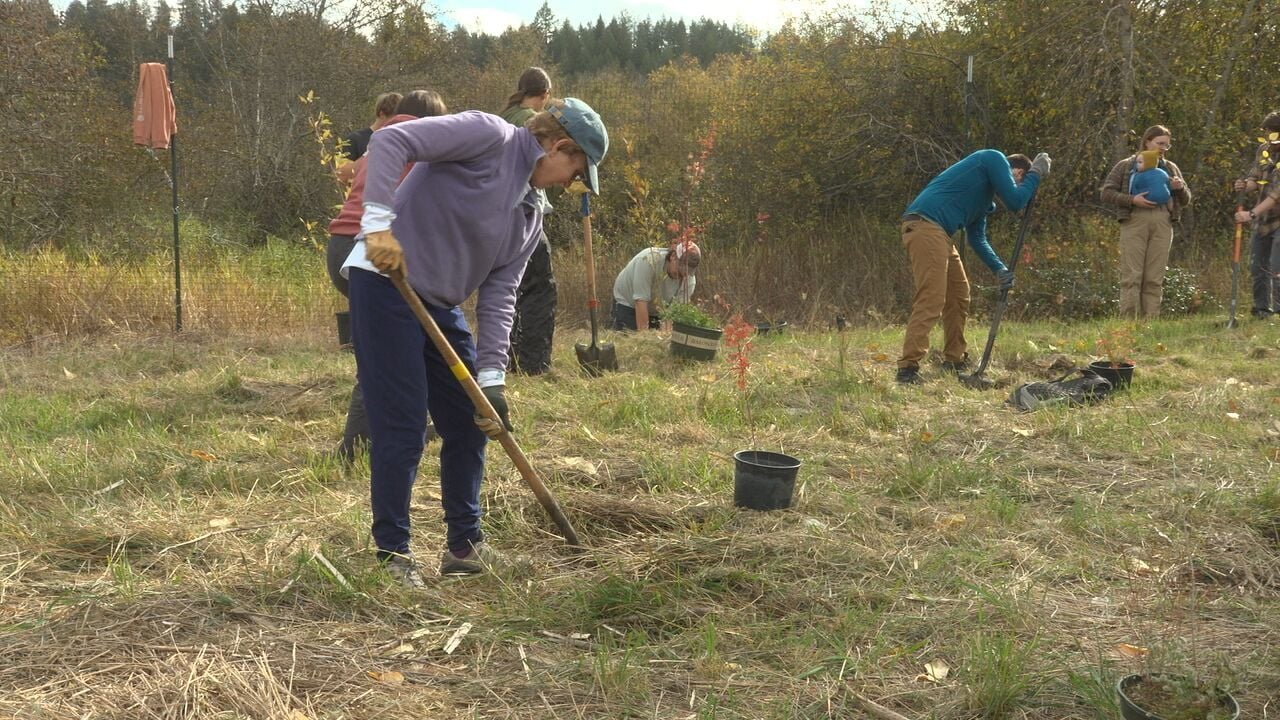
SPOKANE, Wash. — Hundreds of volunteers gathered at the Waikiki Nature Preserve on Saturday to participate in a large-scale environmental restoration effort aimed at revitalizing the Little Spokane River.
The community-driven event brought together more than 200 people who spent the afternoon planting trees as part of a comprehensive project designed to restore the river’s ecological health. Volunteers planted approximately 2,000 trees during the single-day event, marking significant progress toward the larger restoration goals.
The project was organized by local land agencies and environmental conservation groups working to reverse decades of environmental damage to the river system. According to environmental experts involved in the initiative, the Little Spokane River’s condition has suffered considerably from human activity over the years, resulting in visible ecological impacts.
“It kind of prevented the river channel from meandering as it should naturally and so the river, you know, we want it to have that healthy movement if it kind of gets locked into place it starts to kind of erode itself, we start to see water quality issues,” said Rose Macaulay, with the Inland Northwest Lands Conservancy.
The tree-planting initiative represents just the first phase of a multi-year restoration strategy. Environmental officials emphasize that vegetation plays a critical role in stabilizing the riverbank ecosystem and preventing further degradation.
“They will help to stabilize soil, to prevent erosion and sedimentation, they’ll help to filter and kind of pollutants or contaminants,” said Kat Hall, with The Lands Council.
For many volunteers, the work carries personal significance. Alana Livingston, a volunteer at the event, expressed her commitment to the project’s mission.
“This is the space that I love. This is home to me and my family and I will do whatever I have to do to help it grow and stay beautiful,” Livingston said.
Beyond erosion control and water quality improvements, the added vegetation serves another critical function in the region: wildfire mitigation. As severe fire seasons become increasingly common in the Pacific Northwest, the restored vegetation creates protective buffers for both wildlife and nearby communities.
“As we have these more severe fires, wildlife especially are really relying on kind of buffers like this where we have a little bit more moisture, uh habitats are able to persist through fire and it acts as a buffer for people too,” Macaulay said.
The restoration project timeline is ambitious but realistic. Organizers plan to have over 5,000 saplings ready to plant by spring, with the overall restoration effort expected to span multiple years. The next tree-planting event is scheduled for the following weekend, continuing the momentum generated by Saturday’s successful volunteer turnout.
Macaulay noted that while the project requires sustained effort and community commitment, the progress made so far demonstrates the power of collective action in environmental restoration.
“The project could take years, but that its well on its way thanks to the community’s help,” Macaulay said.
COPYRIGHT 2026 BY KXLY. ALL RIGHTS RESERVED. THIS MATERIAL MAY NOT BE PUBLISHED, BROADCAST, REWRITTEN OR REDISTRIBUTED.