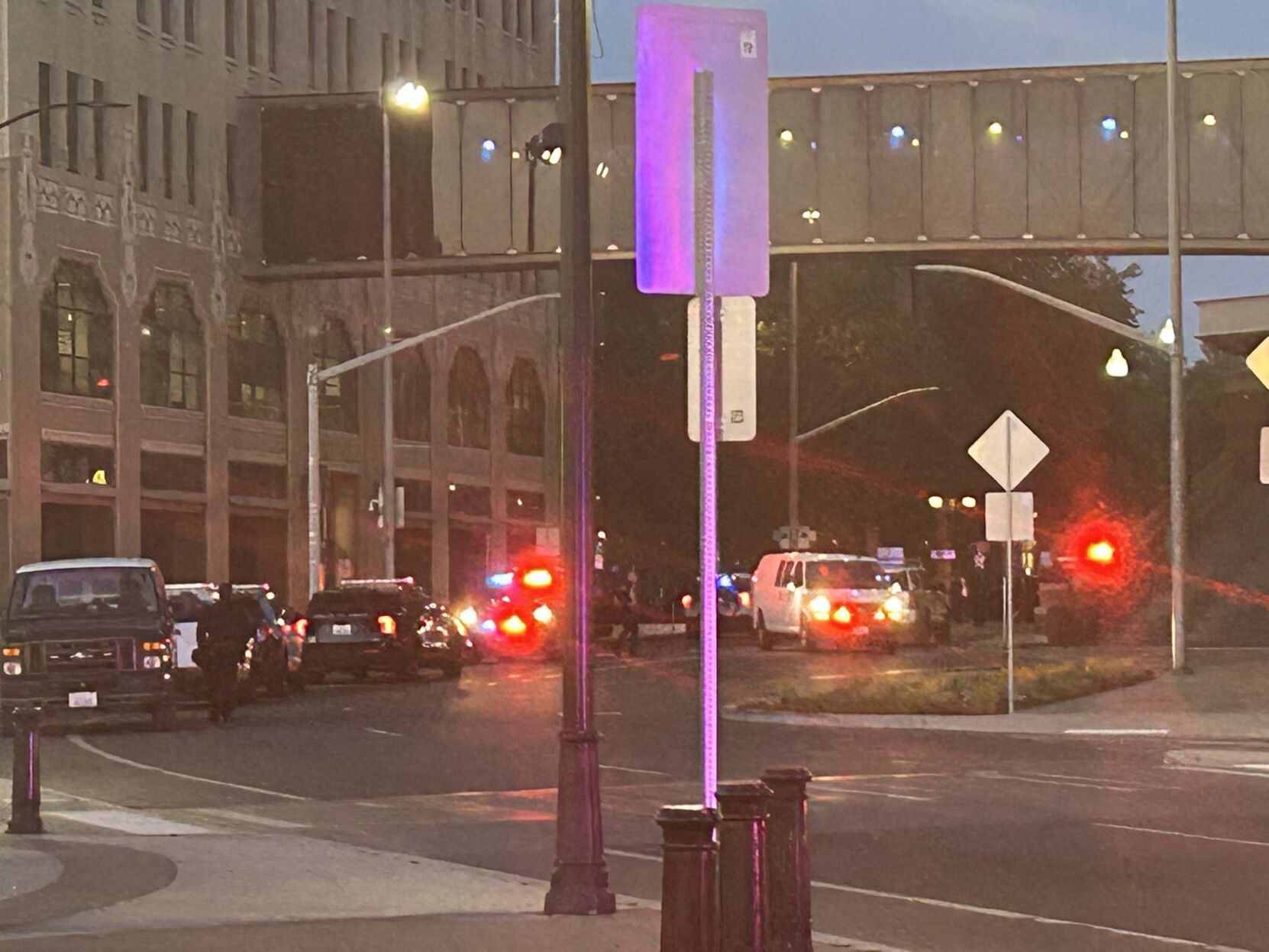
SPOKANE, Wash. — More than 40 people were arrested during two separate protests in Spokane this week, sparking questions about First Amendment rights and law enforcement’s response to public demonstrations.
The arrests occurred during protests on Wednesday and Saturday, with most demonstrators charged with failure to disperse after police issued dispersal orders.
Wednesday’s protest began after Immigration and Customs Enforcement detained two asylum seekers during what advocates believed was a routine check-in. The demonstration escalated when police eventually used pepper balls, smoke canisters and foam batons to disperse crowds.
RELATED COVERAGE: Former Spokane city councilman booked into jail following protest at ICE building
A similar scene unfolded Saturday during the ‘No Kings’ protest, where thousands gathered in Riverfront Park. While most participants remained peaceful, some were arrested for refusing to leave when ordered by police.
RELATED COVERAGE: SPD arrests 11 protesters for ignoring dispersal orders in downtown Spokane
Erica Goldberg, a law professor at Gonzaga University, said there are specific scenarios during public protests when authorities can intervene.
“If you are blocking a vehicle or pedestrian traffic and you don’t have a permit, then the police can ask you to disperse, require you to disperse or issue a dispersal order, as long as it is clear and gives notice,” Goldberg said.
During Wednesday’s protest, Spokane Mayor Lisa Brown also issued a curfew for the area. Goldberg said that such measures require specific justification.
“If the police or the city puts a curfew on a certain type of protest, they are going to have to show that it is for a public safety reason,” she said.
The law enforcement response has drawn criticism from local advocacy groups. Spokane Community Against Racism (SCAR) expressed concerns about the police department’s use of force during both demonstrations.
“We think that that was totally unnecessary. This was a peaceful protest. People were not doing damage to anything. We’ve heard that spray painting a car window is now an act of violence. And it just borders on ridiculous,” said Rev. Walter Kendricks, cofounder of SCAR.
While most arrests involved failure to disperse charges, some protesters face more serious charges, such as malicious mischief.
The arrests have prompted community support efforts, with SCAR establishing a community bail fund to assist detained protesters. The organization continues to advocate for what it views as appropriate law enforcement response to peaceful demonstrations.
For more information on SCAR and the bail fund, visit www.scarspokane.org.
COPYRIGHT 2025 BY KXLY. ALL RIGHTS RESERVED. THIS MATERIAL MAY NOT BE PUBLISHED, BROADCAST, REWRITTEN OR REDISTRIBUTED.