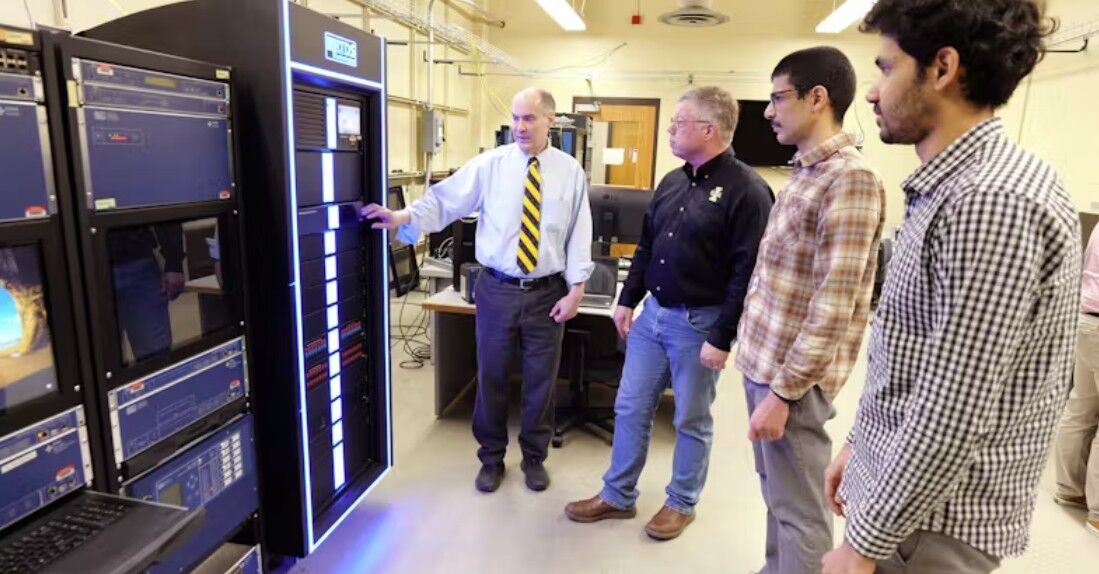
HAILEY, Idaho — The University of Idaho has partnered with Cleveland State University and University of Novi Sad in Serbia to research ways to improve electrical grids and reduce service failures for customers.
These universities are developing a new professional certificate course on advanced distribution management systems (ADMS).
POWER Engineers, through its POWER Foundation funded a half-million-dollar grant to the universities to develop ADMS software to manage increasing energy demands, add renewable energy sources to the power grid, perform maintenance to the grid and ensure safety and regulatory obligations.
These students will work on the project through September 2028.
Right now, American energy companies either train employees on the job, or outsource ADMS skills overseas, which, over time, could become unsustainable.
“ADMS skills will play a pivotal role in our electrical grid and the wider engineering community—including engineering professionals and higher education—must prepare,” said Brian Johnson, Schweitzer Engineering Laboratories Endowed Chair in Power Engineering and distinguished professor at the University of Idaho. “We look forward to expanding the partnership as we learn more about the needs of companies, ADMS professionals and our students.”
A small amount of students can begin going after a professional certificate at these universities in Spring 2026, and the course will be remote-based.
“This micro-credential equips students with the skills required to manage an expanding grid,” said Cleveland State University’s Richard Schoephoerster, Dean of the Washkewicz College of Engineering. “As AI grows and electrification increases, course graduates will be ready to manage and maintain the grid of the future for Ohio and the nation.”“On-the-job training is time-consuming, and a course like this can shorten the learning curve to productivity,” said Mike Vessel, Vice President and Division Manager for POWER’s Advanced Utility Solutions division. “The course will also drive plans to develop additional college classes and to train more professionals in broader grid modernization technologies.”
POWER hopes that, after the third year, the course will be self-sustaining and in higher demand.
COPYRIGHT 2025 BY KXLY. ALL RIGHTS RESERVED. THIS MATERIAL MAY NOT BE PUBLISHED, BROADCAST, REWRITTEN OR REDISTRIBUTED.