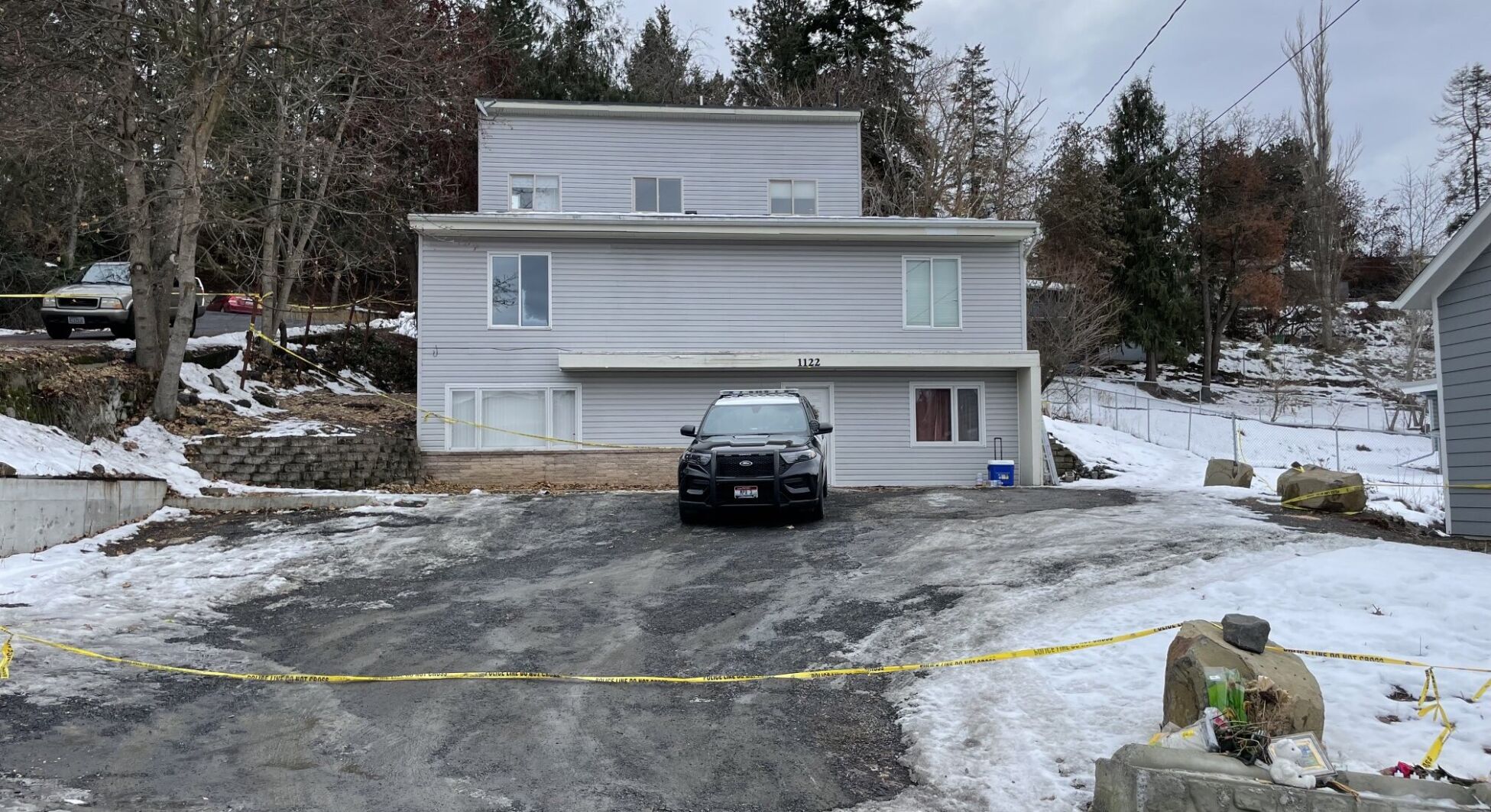
MOSCOW, Idaho – 27 months after four University of Idaho students were murdered in an off-campus home, the 911 call made by the victims’ roommates and friends reveal the moments before and after they discovered the homicides.
You can listen to the full 911 call here.
Despite public records requests from 4 News Now and other media outlets, the 911 call had not been previously released, citing privacy concerns and a possible impact on the case.
However, a court filing last week contained a transcript of portions of the 911 call, deeming it unnecessary by legal standards to keep the call from the public.
The call itself lasts just over four minutes and ends when a Moscow Police Officer arrives at the crime scene.
The Timeline
Prosecutors believe Kaylee Goncalves, Ethan Chapin, Xana Kernodle and Madison Mogen were murdered in the home at 1122 King Road just after 4 a.m. on November 13, 2022.
Two other young women who lived in the home were there at the time but were not harmed.
Transcripts of text messages between the girls released last week show one of them saw a man in a mask moving through the home.
From 4:22 until 4:24 a.m., they texted back and forth, with one of them saying, “I’m not kidding, I’m so freaked out.”
They then called and texted the victims’ phones with no answer.
The surviving roommates expressed some concern, but did not call 911 at that time and did not seem to suspect the severity of the situation.
The young women went to bed.
The next thing we know about what the surviving roommates comes at 11:39 a.m. when one of them texts her father, but that information has not been released.
Finally, at 11:55 a.m. one of the roommates calls 911.
The 911 Call
The 911 callers do not reveal their names to the dispatcher and the dispatcher does not ask for them.
The call begins with a young woman, crying as she tells the dispatcher, “Something happened in her house, we don’t know what.”
After a brief exchange about the address of the emergency, a second young woman gets on the phone.
She is much more matter of fact when she tells the dispatcher, “One of our, one of the roommates is passed out and she was drunk last night and she’s not waking up. Oh, and I saw some man in their house last night.”
While the dispatcher continues to ask for information about the current emergency and the location, the young woman again tries to tell her about what she saw in the house the night before.
DISPATCHER: What is going on currently, is someone passed out right now?
CALLER: I don’t really know, but pretty much at 4 a.m.…
DISPATCHER: I NEED TO KNOW RIGHT NOW IF SOMEONE IS PASSED OUT. CAN YOU FIND THAT OUT?
The young woman then says to someone who is not on the phone, “Come on…we gotta[sic] go check. We have to.”
At that point in the call, you can hear a male voice in the background calling out the name Xana.
The young woman on the phone says, crying, “Is she passed out, what’s wrong? (pause…) She’s not waking up.”
The dispatcher says at that point that help is on the way, and you can hear the caller crying and breathing frantically.
You can then hear the male voice say to the young women, “Get out, get out, get out.”
The young man then gets on the phone and the dispatcher tells him they need to stop passing the phone around. Before handing the phone back to the young women, he tells the dispatcher that Xana isn’t breathing.
Within seconds of that exchange, a police officer arrives on the scene. The dispatcher tells the caller she’s hanging up and letting police take it from there.
Why does the call matter?
Recent filings show the 911 call has already played a role in some of the court filings over the past two years.
Portions of the transcript were made public through a recent motion filed by prosecutors.
They want the court to admit the 911 call as evidence, countering a previous filing by the defense that called the contents “hearsay.”
The defense made that assertion in a motion that asked the judge to dismiss the indictment against Bryan Kohberger. The defense tried to argue at that time the 911 call was “improperly admitted hearsay, cumulative, irrelevant and an improper attempt to bolster witness testimony.”
Judge John Judge in Moscow dismissed that motion. A judge in Ada County is now presiding over the case.
The prosecution specifically highlights the assertion that the roommates saw someone in the home that morning.
“The statement regarding a person being in the home is in direct response to why Kernodle may be passed out,” prosecutors wrote.
Prosecutors made the motion on February 24. The defense has responded to several motions made around the same time, but the court has granted the defense request to seal the responses.
Kohberger is scheduled to stand trial in August in Boise. He faces the death penalty if convicted.
COPYRIGHT 2025 BY KXLY. ALL RIGHTS RESERVED. THIS MATERIAL MAY NOT BE PUBLISHED, BROADCAST, REWRITTEN OR REDISTRIBUTED.