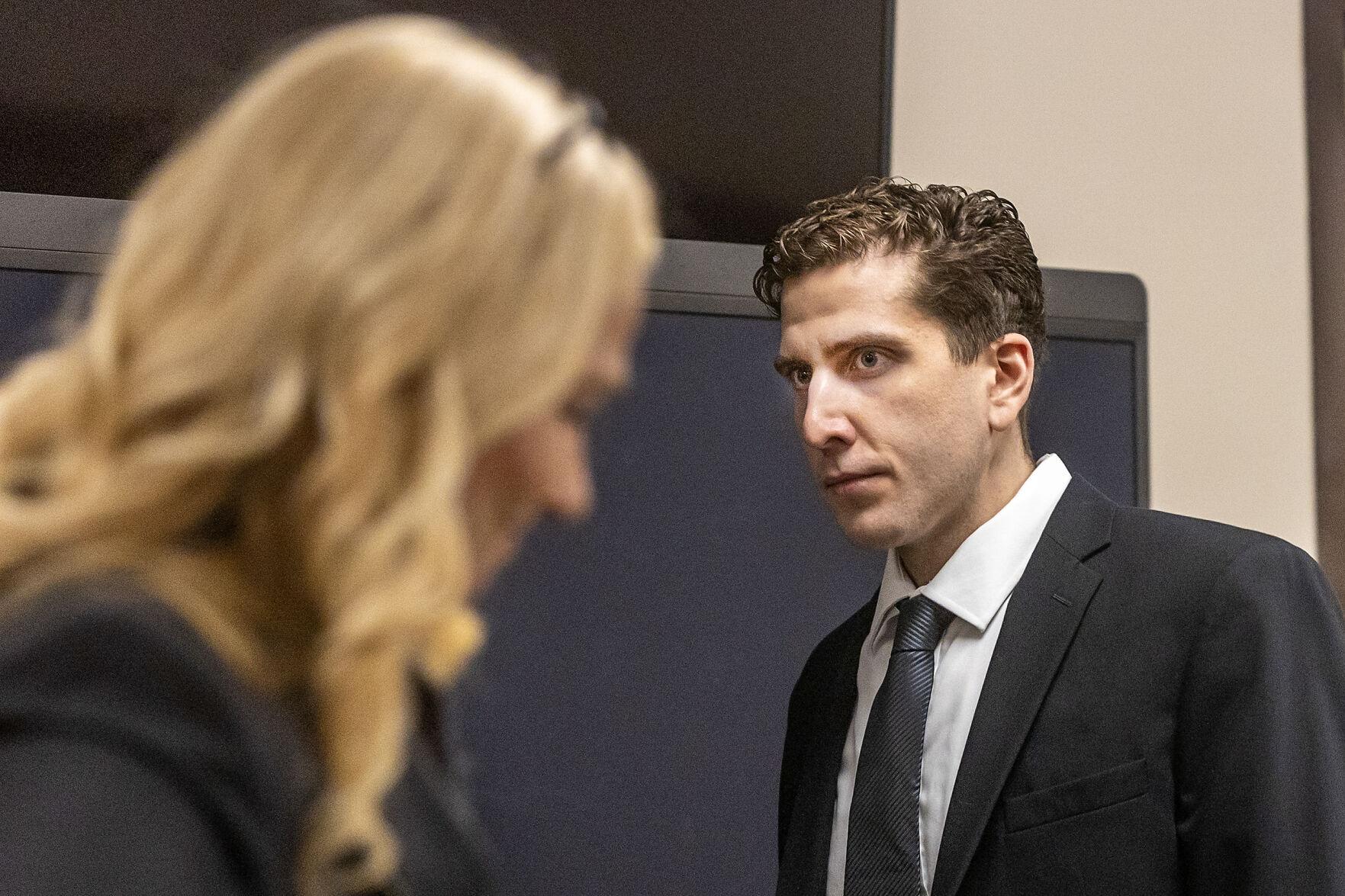
BOISE, Idaho — A judge will now consider whether critical DNA evidence will be thrown out in the murder case of four University of Idaho students.
Of the thousands of pieces of evidence presented in this case, seemingly none are more crucial than the way police tested and tracked Kohberger’s whereabouts the night of the murders.
In a hearing that stretched two days, defense attorneys pressed the judge to suppress critical evidence that prosecutors say ties Kohberger to these murders.
On Friday, Kohberger’s team challenged the way police acquired his cell phone data the night of the murders and the weeks leading up to it.
The defense argued that several search warrants police used to access this data was too broad, unspecific and should be tossed from the case.
“A search warrant must be particular enough so that as to what is taken, nothing is left to the discretion of the officer executing the warrant,” Kohberger’s defense attorney argued. “The government cannot seize the haystack to search for a needle.”
The state pushed back on the defense’s claims.
“Each one of them listed that they were specific to the type of crime, the location, and all but one of them had temporal limitations.”
The defense is hopeful to force a Franks hearing; a proceeding where the judge will decide if search warrants are dismissed from the case. If that happens, everything discovered through those warrants would not be admissible in this case.
Friday’s arguments came after a lengthy hearing on Thursday discussing DNA.
In the days following the murders, police tested a piece of DNA on the button snap of a knife sheath left behind at the murder scene. They first submitted it through CODIS, a database made up of DNA comprised of missing persons, cold cases and convicted criminals. No matches came from that search.
According to the defense, the FBI then submitted it to a public genealogy database without a search warrant, which they claim violates Kohberger’s constitutional right to privacy.
“The court should suppress the IGG identification and everything that flows from that,” said Kohberger’s attorney Anne Taylor.
The state said there’s no case law to suggest that there is a reasonable expectation of privacy when DNA is found at a crime scene.
If the defense is successful, this would deal a major blow to the prosecution less than eight months away from when the trial is set to begin.
Judge Hippler has yet to make a decision on whether to throw out the DNA testing.
COPYRIGHT 2025 BY KXLY. ALL RIGHTS RESERVED. THIS MATERIAL MAY NOT BE PUBLISHED, BROADCAST, REWRITTEN OR REDISTRIBUTED.