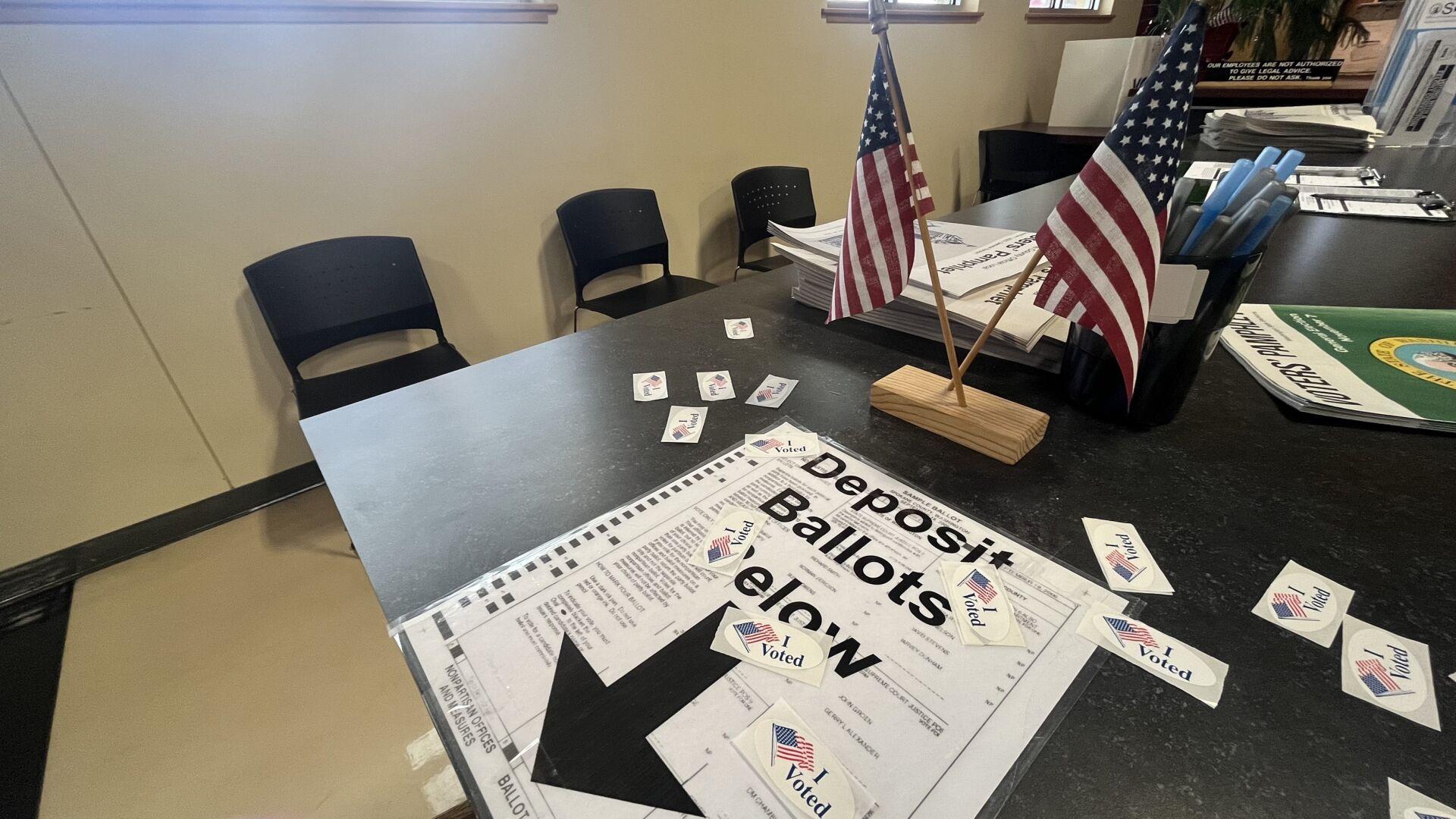
It’s very unlikely that Americans will know the outcome of this year’s presidential race on Election Day. It could take days, even weeks, after polls close before the results become clear. The same is true for control of the U.S. House and Senate and for other close contests.
The reasons are mostly procedural. Accurate vote counting takes time, especially when it involves millions of mail ballots. Legal challenges, audits and recounts can also extend the period needed to determine the outcome.
Election officials caution Americans to be patient. They say what might look like delays are part of the normal process and not a sign of something nefarious. They warn that simply because a candidate declares victory does not make it true.
“No candidate determines who wins the race,” said Spokane County Auditor Vicky Dalton. “It is the elections officials who count the votes and certify the results who determine the outcome of that race.”
In 2020, it was four days after Election Day before Joe Biden was declared the winner. Even those results were unofficial, based on the projections of multiple news organizations.
But that period of uncertainty, and public confusion, opened the way for unfounded allegations of fraud. Former President Trump and his allies used what appeared to be late “changes’ in the vote count to cast doubt on the legitimacy of the election.
Trump even demanded that the counting be stopped hours after the polls closed, falsely accusing Democrats of “finding” ballots to manipulate the outcome.
“We don’t want them to find any ballots at 4 o’clock in the morning and add them to the list,” he said. “To me, this is a very sad moment, and we will win this, and as far as I’m concerned, we already have won it.”
But what Trump and his allies were denouncing was the normal vote-counting process. Officials had warned repeatedly that the count would take time, especially with the expanded use of mail balloting by Democrats during the pandemic. That created what was became known as a ‘red mirage” on Election Day, something that quickly disappeared once all the votes were tallied.
Election experts warn the same thing could happen again this year.
Ballots cast by voters on Election Day are tabulated relatively quickly, usually by machine, but even those results need to be double-checked.
Mail ballots can take longer to count. Each ballot must be reviewed for accuracy and to ensure that it comes from a legitimate voter. The process of removing the ballot from the envelope and preparing it to be counted, either by hand or machine, also takes time.
Some states prohibit officials from beginning this process before Election Day, all but guaranteeing that the count will be extended. That is the case this year in two battleground states, Wisconsin and Pennsylvania.
“Here in the state of Washington we are a postmark state,” Dalton said. “So, if you drop your ballot in the mail on Tuesday and get a postmark of Tuesday, but it doesn’t arrive in our hands until Friday, that’s still a valid ballot, and we’re going to count it, but that means it’s going to be a few days later before we process that ballot, count it and add it to the totals.”
Idaho will release results from early voting and absentee voting at 8 p.m. on election night.
“I do anticipate it will take us well into Wednesday morning for us to have any complete results,” said Idaho Secretary of State Phil McGrane. “I think in particular, those statewide issues or legislative races that are close that have multiple counties in them.”
There are other factors that could lead to a longer counting period.
Most states require mail ballots to be received by Election Day. But a few states — such as Nevada, California and Maryland — allow ballots to arrive several days after Election Day, as long they are postmarked by then. Many states provide a similar grace period for military and overseas ballots.
In Washington, ballots have to be postmarked by Election Day in order to count. That means thousands of votes arrive in the days following the election.
“The biggest delay in getting the results out are the people who wait until the last minute,” said Dalton.”We know that there are some people who are very nostalgic and feel like they need to wait until Election Day before turning their ballot in, even though they have marked and sealed a ballot two weeks ago. That is what slows down the completion of the results. So the sooner that voters get their ballot in, the sooner that ballot’s processed and then it’s ready to go on election night to be included in those in the initial results.”
In Idaho, absentee ballots need to arrive by 8 p.m. on Election Day to count.
Voters who cast provisional ballots, often because they lack the required ID or their names are missing from the rolls, are also allowed several days after Election Day to address those problems.
In addition, some states give voters a few days to “cure” or fix errors on their mail ballots so they can be counted. In a close race, this can make a difference.
Election experts offer another word of caution. Even when enough votes have been counted to allow media outlets to project a winner, those results are not final. They still need to be certified by election officials, a process that usually occurs several weeks after Election Day when canvassing and audits are complete.
The certification deadline in Washington is December 5. Idaho’s election results need to be certified by November 20.
Close races can also trigger automatic or candidate-requested recounts or attract legal challenges that can drag the contest out even further.
Election officials hope that doesn’t happen, but if it does, they say it’s all part of a system designed to produce fair and accurate results.
This story was created with the help of Trusting News and Elections SOS
COPYRIGHT 2024 BY KXLY. ALL RIGHTS RESERVED. THIS MATERIAL MAY NOT BE PUBLISHED, BROADCAST, REWRITTEN OR REDISTRIBUTED.