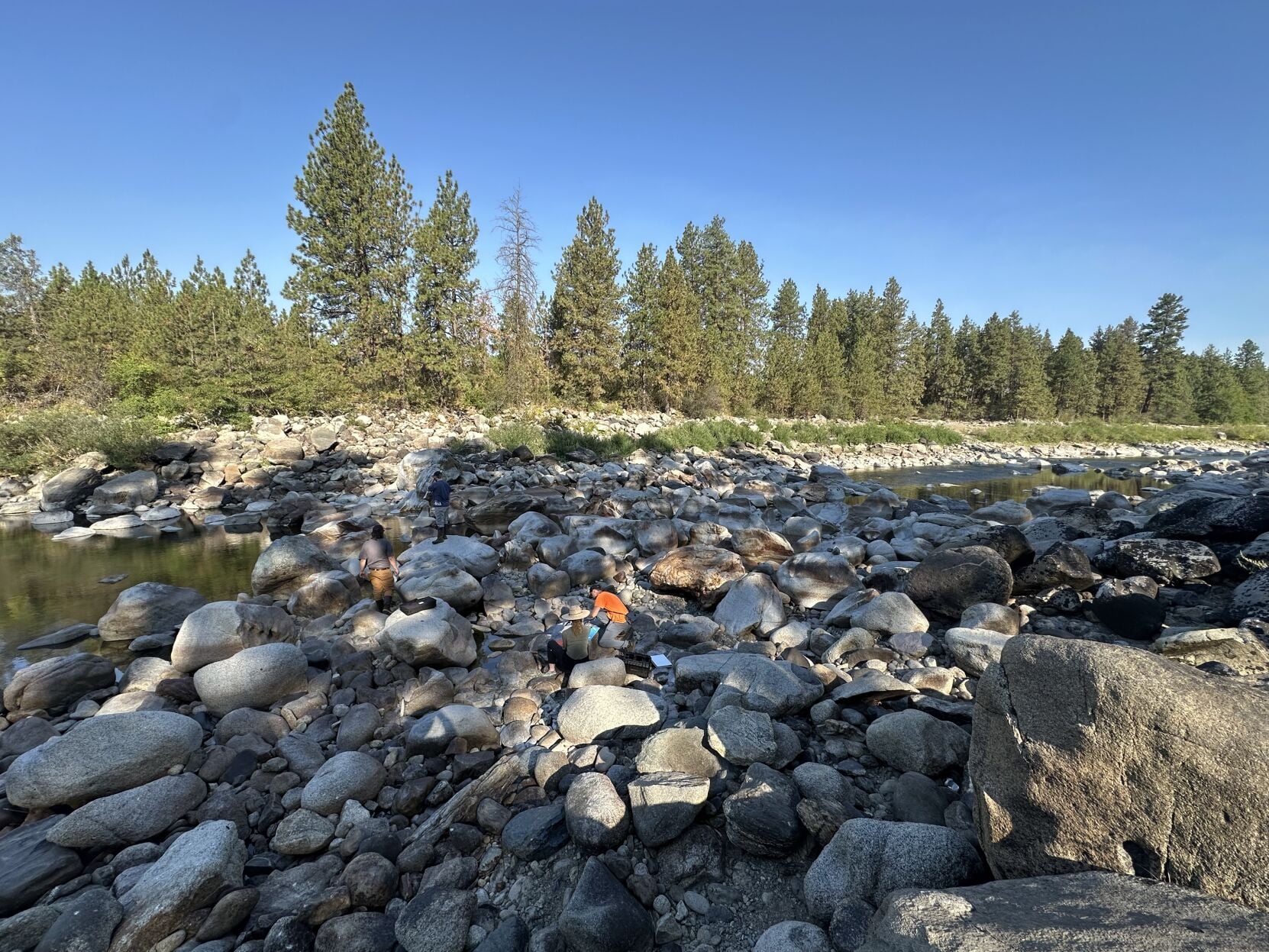
SPOKANE VALLEY, Wash. — When a two-mile stretch of the Spokane River from approximately Mission Avenue to Barker Road went dry again this summer, it raised alarm bells with local environmental groups.
“This represents our community, This is a place to play, to recreate. To come down to, to hang out, and commune with nature and it’s not here anymore,” said Jule Schultz, a waterkeeper with Spokane Riverkeeper.
The dry river also drew the attention of scientists, including John Porcello, the principal hydrologist at GSI Water Solutions. Porcello has studied the aquifer for more than 30 years and helped lead drone surveys of the area in August.
“I think it was August 8 this year, that was when the first reports came in that the river had gone dry. Last year, it was August 25, so that’s a 17-day difference,” said Porcello.
One theory circulated in the Inland Northwest is the River dried up in that area because it is draining into the aquifer, but Porcello says that is not the case. He believes there are a few reasons why it is happening, one being that something hydrological has changed in the footprint of the entire watershed, noting poor snowpacks the last two winters.
“That effects how much water is available, it effects how long that water, which is part of the snowpack, stays up in the mountains and how late in the year to then help recharge Coeur d’Alene Lake and, therefore, the Spokane River,” said Porcello.
Porcello also believes the physics and elevation relationships in this particular stretch of the river make it more susceptible to drying up, but he is not worried about it happening in other parts of the river.
“I think it’s mostly an issue about this particular reach and not other reaches of the river,” he said.
Seeing the riverbed dry up twice in two years has many wondering if adding data centers in our region would make the problem even worse in the future, because those data centers need a lot of water to cool servers.
The National Groundwater Association is also concerned, saying “responsible data center development requires protection of groundwater quantity and quality, transparency in water and energy use, and application of best available technologies to reduce consumptive water use.”
“From the water supply side, data centers are starting to become more efficient in their water use, certainly than what they were three to five years ago,” Porcello said.
Joe Gilbert, an adjunct instructor in water science at Spokane Community College, highlighted how the river drying up impacts the overall ecosystem of the Spokane River.
“It’s a disaster for aquatic habitats: invertebrates, fish, recreation,” he said.
Porcello agrees, but from a hydrology standpoint, it is a little less alarming to him.
“It is the climate that we’ve had,” Porcello said.
Porcello says overall, climate contributes to the health of the river.
“It’s those short-term and long-term patterns we see in the climate that are what’s driving the conditions we see here in the river,” he said. “That’s the thing I would want to leave people with.”
COPYRIGHT 2026 BY KXLY. ALL RIGHTS RESERVED. THIS MATERIAL MAY NOT BE PUBLISHED, BROADCAST, REWRITTEN OR REDISTRIBUTED.