SPOKANE, Wash. — Most of the school levies on ballots across Washington were approved in the most recent special elections. But a majority of school bonds that ran in Washington failed, leaving people to wonder what other funding sources school districts could lean on.
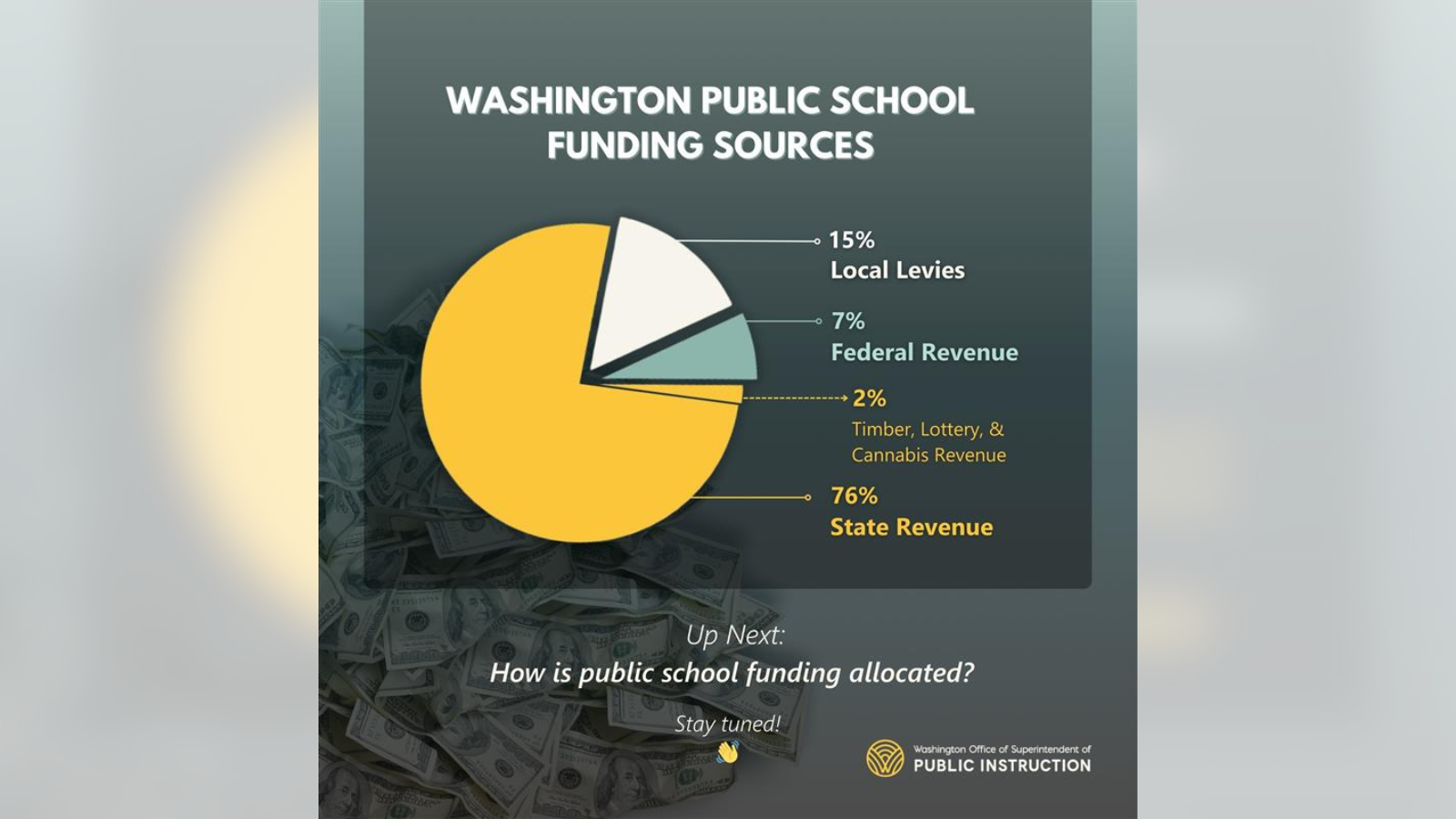
School districts rely on local levies for about 15% of their total revenue. Many people wonder why they need to pay more taxes for levies and bonds when schools also get money from cannabis, timber and lottery revenue.
Revenue from the lottery and cannabis only makes up a small percentage of funding school districts can count on. OSPI estimates schools only get about 2% of their funding from those sources.
Even though the Washington Lottery generates nearly a billion dollars in revenue each year, less than 20% of that goes back into education. That added up to $180 million from the lottery in 2025, but even when combined with cannabis and timber funding, it only makes up a small percentage of an average school’s total funding.
The majority of the funding comes from the state, but State Superintendent Chris Reykdal says recent budget proposals could reduce how much schools are getting.
“This budget, and prior budgets, have cut our state’s funding for students when we adjust for inflation by $500 a kid over the last 6 or 7 years. So not only are we not investing more as we should, we’re actually going the wrong direction,” Reykdal said.
State Superintendent Chris Reykdal also says overall, Washington is near the bottom for funding education.
“We’re ranked 40th. 40th out of 50 states. There are only 10 states that spend less of their income, their aggregate economy on education. There we are down there at 2.5% and the national average is 3.1%,” Reykdal said.
With the prospect of budget cuts from the state, many districts are hopeful they can secure funding from local taxpayers through a bond or levy.
If schools are hoping to make any improvements to their buildings, they have to convince voters to approve a bond, which has become challenging for many districts.
Bonds are much harder to pass than levies. While voters can change their minds about levies every few years, bonds typically last 10 to 25 years and require a 60% supermajority to pass. Levies only require a simple majority.
Washington education group WISE says less than 40% of school bonds were approved across the state in last week’s election.
There is a bill in the Senate that would start the process of getting rid of that supermajority for school bonds. That bill is still in a Senate committee, but if it passes, voters would still need to approve a referendum to change the state’s constitution.
WISE believes the supermajority rule currently in place is outdated.
COPYRIGHT 2025 BY KXLY. ALL RIGHTS RESERVED. THIS MATERIAL MAY NOT BE PUBLISHED, BROADCAST, REWRITTEN OR REDISTRIBUTED.