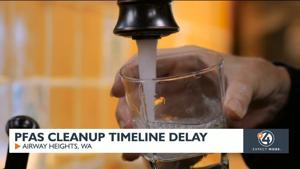
AIRWAY HEIGHTS, Wash — The federal government has quietly pushed back its timeline for cleaning up PFAS contamination on Spokane’s west plains by six years, leaving thousands of homeowners without answers about when their water will be safe.
The Department of Defense was supposed to deliver a cleanup plan by July 2026, but that deadline has quietly been moved to June 2032, according to a table released by the Department of Defense of in March of 2025.
The delay affects approximately 4,000 homes near Fairchild Air Force Base and Spokane International Airport that have dealt with PFAS contamination in their groundwater since 2017.
“Well, it’s been so long since 2017 of talking about it investigating, discussing but yet not a drop of PFAS has yet been scooped up out of the ground or at the water,” said John Hancock, president of the West Plains Water Coalition and a resident whose home is impacted by the contamination.
PFAS, known as “forever chemicals” because they don’t break down naturally, have been linked to serious health conditions including cancer. The contamination comes from firefighting foam used at military bases and airports across the country.
For nearly a decade, residents have relied on water filters and filtration tanks while worrying about the health impacts of the contamination. The Defense Department has allocated about $157,000 to investigate the PFAS contamination in the area.
Hancock said residents received no advance warning about the timeline change.
“Well, it’s just frustrating to feel like what the neighbors have to say doesn’t really matter all that much and the pressure of the local elected doesn’t seem to matter very much either,” he said.
The delay has drawn concern from Washington Senator Patty Murray, particularly as Republican lawmakers in Congress have proposed cutting funding for environmental cleanup efforts. On November 13, Murray wrote to the Department of Defense demanding answers about the timeline extension and whether funding will continue for sites like Fairchild.
In response to Murray’s letter, the DOD said the previous timetable did not reflect a final decision, only a proposed one. The department said the new date accounts for public comment to be taken into consideration before a final solution is implemented.
Currently, Fairchild is in the remedial investigation phase of the cleanup process, which could take between three to five years, with four more steps required before cleanup is complete.
“‘Forever’ is how the chemistry has been described — because it doesn’t break down. There’s no half-life, it isn’t biodegradable, but the process shouldn’t take forever. The process should be unfolding quickly,” Hancock said.
For residents like Hancock, the delay raises concerns about whether more setbacks are ahead.
“So it’s really a slow moving investigation, a slow moving response of an issue that has contaminated the lives of up to 4,000 families,” he said.
The PFAS contamination on the west plains represents one of many similar cases across the United States where military installations have contaminated local water supplies with firefighting foam chemicals. The cleanup process typically involves multiple phases of investigation, planning, and remediation that can span decades.
COPYRIGHT 2025 BY KXLY. ALL RIGHTS RESERVED. THIS MATERIAL MAY NOT BE PUBLISHED, BROADCAST, REWRITTEN OR REDISTRIBUTED.