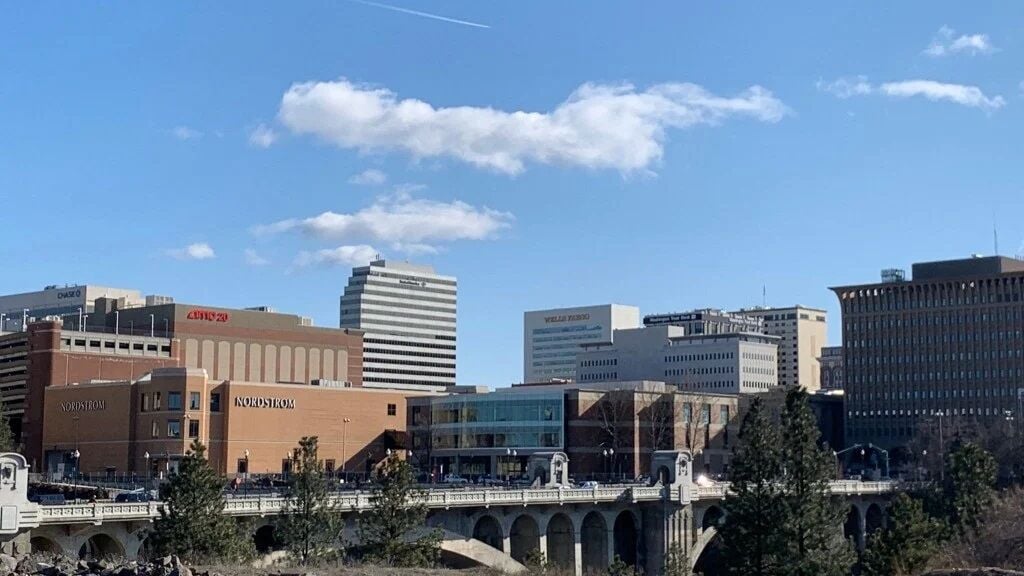
SPOKANE, Wash. — Clean air officials in Spokane County are celebrating “one of the region’s biggest success stories,” a milestone they’ve been trying to reach for decades.
The Spokane Regional Clean Air Agency (SRCAA) announced the end of a 20-year, federally mandated, maintenance period demonstrating continued compliance with clean air standards for carbon monoxide and particulate matter (PM10).
“Spokane County’s air quality meets clean air standards nearly every day of the year, with a handful of exceptions that mainly occur during wildfire season, said SRCAA Executive Director April Westby in a press release. “This is a remarkable turnaround from the 1970s, ’80s, and ’90s, when the area routinely failed health-based clean air standards established by the U.S. Environmental Protection Agency.”
It says while car emissions are the largest contributor to carbon monoxide the particulate matter measuring 10 microns in diameter or less, referred to as PM10, is primarily composed of dust and smoke particles.
SRCAA says a combination of factors brought the Spokane area into compliance with the clean air standards, including automobile technologies such as catalytic converters, electronic fuel injection, and oxygen sensors.
The agency went on to say “other reductions were achieved through the use of oxygenated fuel during winter, the switch to cleaner wood heating devices, improved street cleaning practices, and the use of cleaner traction sand in combination with chemical liquid deicers.”
The SRCAA says the end of the 20-year maintenance period doesn’t affect its programs to improve and maintain clean air.
However, it says there’s still room for improvement when it comes to fine particle pollution or PM2.5.
SRCAA says since 2012, the Spokane area has experienced an annual average of 5.5 days of unhealthy PM2.5 levels due to wildfire smoke. Wood heating, outdoor burning, and diesel vehicle exhaust can also increase PM2.5 levels.
“There is still plenty of work to do to achieve clean air year-round,” Westby said in the press release. “About 80% of our air pollution comes from our everyday choices—how we drive, heat our homes, and use energy. So small changes across our community can add up to cleaner, healthier air.”
COPYRIGHT 2025 BY KXLY. ALL RIGHTS RESERVED. THIS MATERIAL MAY NOT BE PUBLISHED, BROADCAST, REWRITTEN OR REDISTRIBUTED.