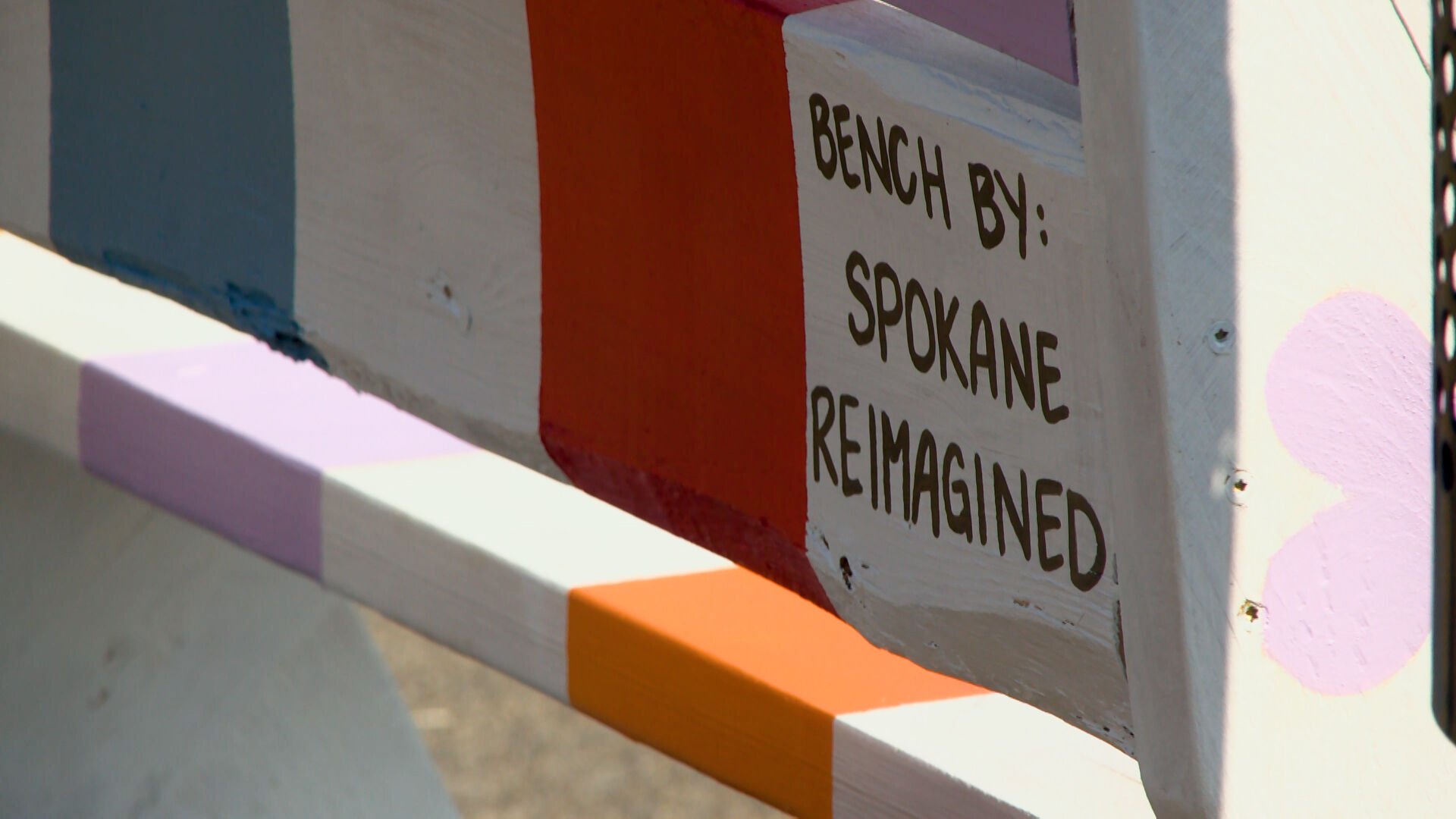
SPOKANE, Wash. — You might see a new colorful bench in your neighborhood as a local advocacy group installed benches at bus stops across Spokane to make public transportation safer and more enjoyable.
Spokane Reimagined, a community organization, placed the benches at bus stops that previously lacked seating, targeting one stop in each of Spokane’s 29 neighborhoods.
The installation coincides with National Week Without Driving and serves as a call to action for the Spokane Transit Authority to step up and improve bus stop infrastructure.
“Some of our wait times can be 15 or 30 minutes, maybe an hour on the weekends for some routes,” said Sarah Rose of Spokane Reimagined.
The lengthy wait times create challenges for transit riders, particularly when they have to stand beside busy traffic while carrying personal items or groceries. The lack of basic amenities like seating can make driving seem more appealing and safer than using public transportation.
Spokane Reimagined began the project in early July, with volunteers working on the bench construction.
“We started in early July with the lumber, and I did a lot of prep work, a lot of the cutting,” Rose said.
The colorful benches, painted by local artists and community members, now provide seating at stops where riders previously had to stand or rely on makeshift solutions like folding chairs.
Spokane Reimagined said building permanent shelters and benches involves regulatory hurdles and bureaucratic processes. Their benches serve as temporary solutions while advocating for more comprehensive improvements.
“We acknowledge that there are a lot of hurdles when it comes to building safe shelters and benches. And we thought that in the meantime, we could put some placeholder benches in for people to use while they’re waiting for the bus,” Rose said.
The initiative reflects broader concerns about transportation equity and infrastructure planning. Erik Lowe of Spokane Reimagined said it’s crucial to consider all transportation users.
“I just think that it’s really important for us to remember that non-drivers are people too. And we should plan our transportation system around all users, not just those who are in a car,” Lowe said.
Beyond providing immediate relief for transit riders, the project aims to inspire community engagement and local action. Rose hopes the initiative demonstrates that residents have the power to improve their neighborhoods.
“I’m really hoping that people take the fact that you have autonomy over your own neighborhood, and that you have the right to give something to your community,” Rose said.
COPYRIGHT 2025 BY KXLY. ALL RIGHTS RESERVED. THIS MATERIAL MAY NOT BE PUBLISHED, BROADCAST, REWRITTEN OR REDISTRIBUTED.