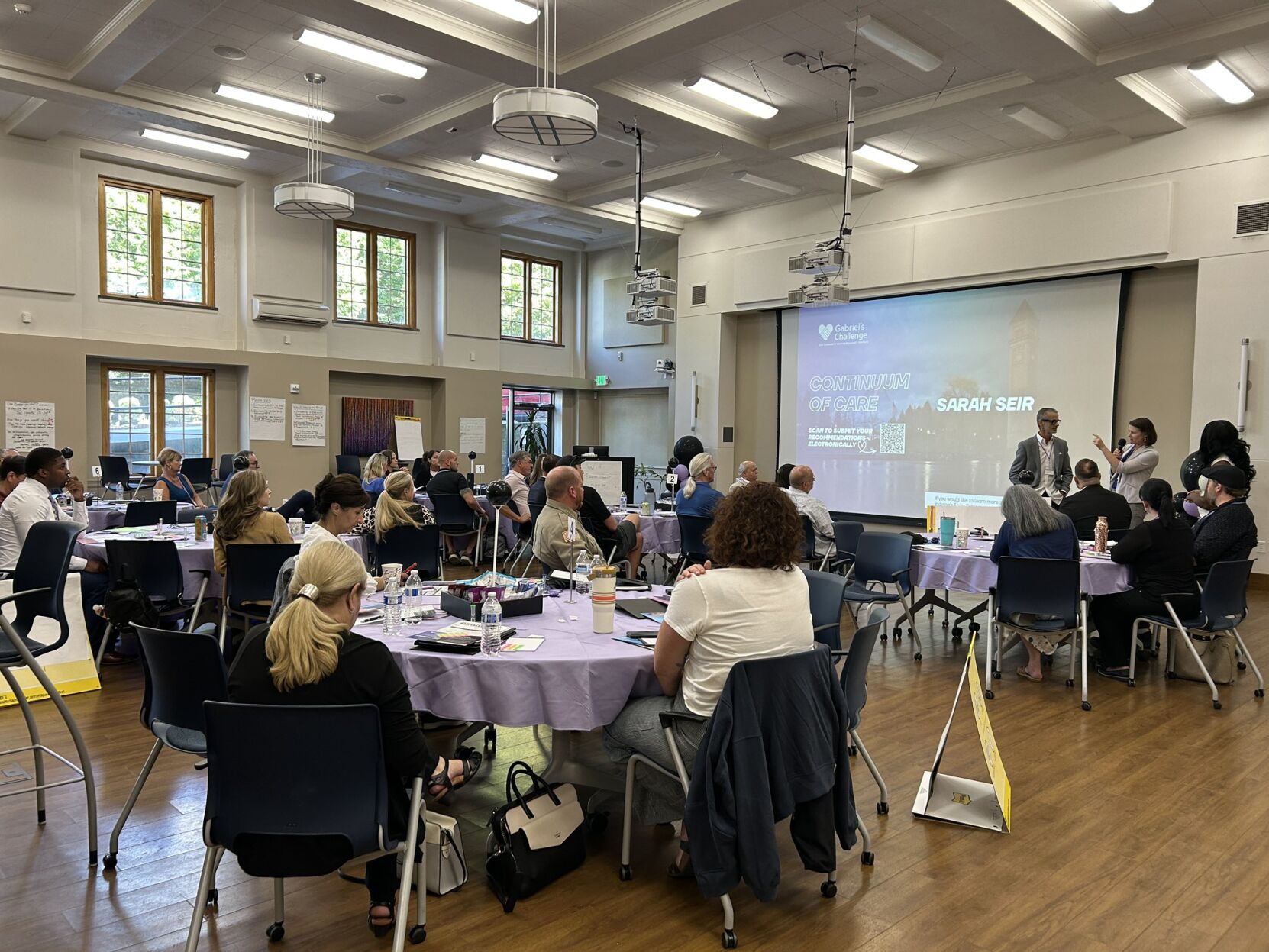
SPOKANE, Wash. — Community leaders from across Spokane gathered downtown today for the city’s first “No Wrong Door” summit to address the opioid crisis as the county tracks toward one overdose death per day in 2025.
The six-hour summit brought together local representatives, medical professionals and people with personal connections to opioid addiction to identify solutions for helping people struggling with substance use find recovery and preventing others from turning to drug abuse.
“This summit was to bring in the leaders who have the power to make immediate change,” said Kitara Johnson, founder of Gabriel’s Challenge and the driving force behind the summit.
Johnson organized the event after losing her son Gabriel to a fentanyl overdose earlier this year. She invited dozens of community leaders to collaborate on addressing common barriers that stand in the way of overdose recovery in Spokane.
The summit deliberately removed titles from name tags to level the playing field and encourage collaboration among attendees.
“Drug addiction doesn’t have a title. It doesn’t care about your title,” said Michael Bray, a mental health professional who attended the summit.
Chandelle Gill, who works in addiction recovery, offered both her professional expertise and personal perspective as someone in recovery herself.
“I’m just a human. I don’t have a whole lot of letters behind my name or anything,” Gill said. “I’m just kind of here as someone that was lucky enough to make it out alive and rebuild my life and try to provide that perspective in a room full of people that may not have that firsthand knowledge.”
During the summit, attendees voted on solutions to address barriers preventing effective overdose recovery in the community.
“A lot of them were very similar, and there were a handful that were wildly opposing,” Gill said.
Johnson said these differences must be addressed for meaningful policy changes to move forward. She wants to advocate for state legislation in Washington that would prevent treatment facilities from turning away people suffering from addiction because they are deemed too “high risk.”
However, Johnson acknowledged that additional summits will be necessary before such legislation becomes reality.
“I believe we have the right people in a room for this session. And we will continue to do these and bringing the people in together to make the right choices, listening to the people and addressing the solutions to be judgment-free and solutions-focus,” Johnson said.
Despite differing approaches, attendees found common ground in recognizing both the severity of the problem and the need for multiple solutions.
“We can agree that there’s a problem and also that there are different avenues to fix it,” Gill said.
COPYRIGHT 2025 BY KXLY. ALL RIGHTS RESERVED. THIS MATERIAL MAY NOT BE PUBLISHED, BROADCAST, REWRITTEN OR REDISTRIBUTED.