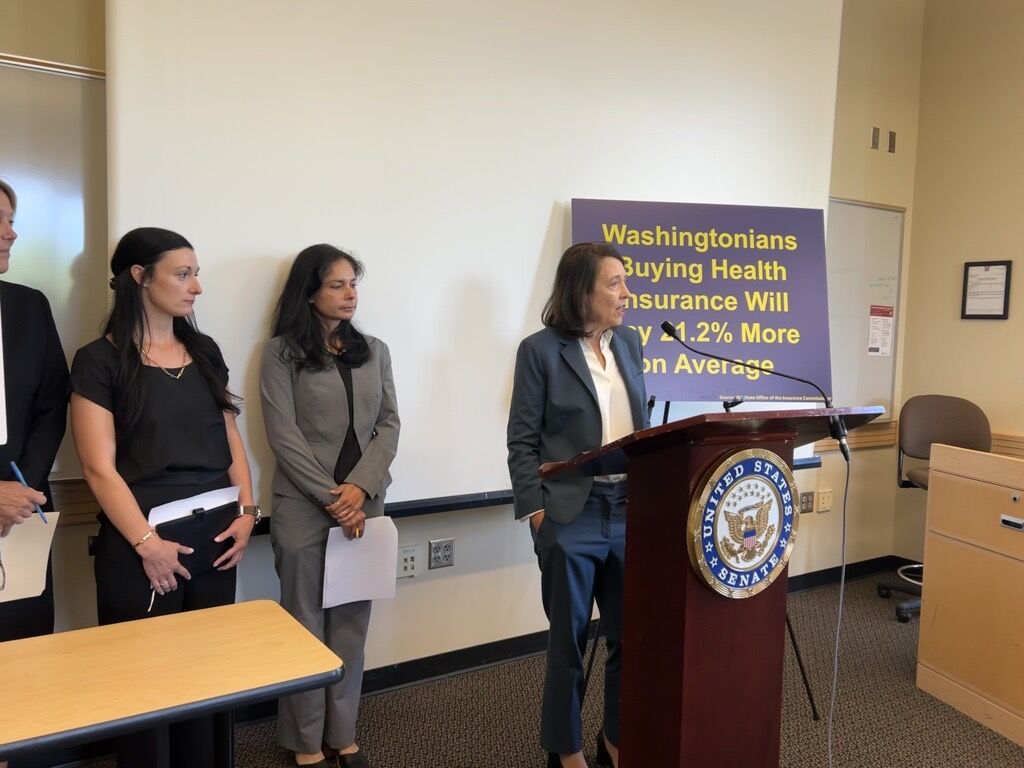
SPOKANE, Wash. – Senator Maria Cantwell met with small business owners in downtown Spokane on Thursday to discuss future impacts stemming from legislation that passed last month.
Under President Trump’s ‘Big, Beautiful Bill’, enhanced premium tax credits are scheduled to end on January 1, 2026.
More than 200,000 Washingtonians depend on these subsidies.
Without them, WSU economics professor Bidisha Mandal explained healthcare premiums could rise anywhere from 16 to 75 percent for these families.
Economists predict rising healthcare costs may drive workers away from health insurance plans, which could ultimately cost taxpayers more.
Sen. Cantwell warns the effects may be more dramatic in the Inland Northwest.
“The issue for Eastern Washington is that you have less providers,” Cantwell said. “In a time when affordability is such a critical issue across many fronts — food, household goods, and a variety of other things, certainly, let’s not make healthcare more expensive.”
Under this new legislation, the federal government would save an estimated $21 billion in the next fiscal year, but this comes with significant trade-offs, as more and more people will be living without the insurance they need.
This is forcing small business owners to make some difficult decisions.
“I’m left with impossible decisions on whether I continue to invest in my employees’ health care at the rate I’m able to or increase wages — especially when my teachers are already paid less than they deserve for the essential work they provide our community,” said Nicole Sohn, executive director of Journey Discovery Center in Spokane.
She worries that higher healthcare costs may keep her from hiring the daycare teachers she needs at a competitive rate.
Without enough teachers, families may not have a place to send their kids when they go to work.
“When families can’t go to work, it’s not just me that’s impacted, it’s every employer in every county in our state. It’s manufacturing, it’s retail. It’s everywhere,” Sohn said. “We need to find solutions, partnerships and funding strategies that reflect that reality. Because when childcare works, the rest of the economy does too,” Sohn said.
COPYRIGHT 2025 BY KXLY. ALL RIGHTS RESERVED. THIS MATERIAL MAY NOT BE PUBLISHED, BROADCAST, REWRITTEN OR REDISTRIBUTED.