SPOKANE, Wash. — Washington lawmakers have advanced legislation that some say primarily targets Tesla.
House Bill 2077 would impose an excise tax on both the sale and banking of Zero Emission Vehicle (ZEV) credits. Under Washington’s Clean Car Standards, automakers must sell a certain number of electric vehicles. Those who don’t meet these requirements can purchase ZEV credits from companies with an excess amount, such as Tesla.
“We’ve found since the program started is that EV-only manufacturers are making a lot of money on the transactions of these credits,” said State Rep. Joe Fitzgibbon, the bill’s sponsor.
Fitzgibbon believes profits from credit sales should be redirected toward making electric vehicles more accessible for Washington residents, which he says is the bill’s goal.
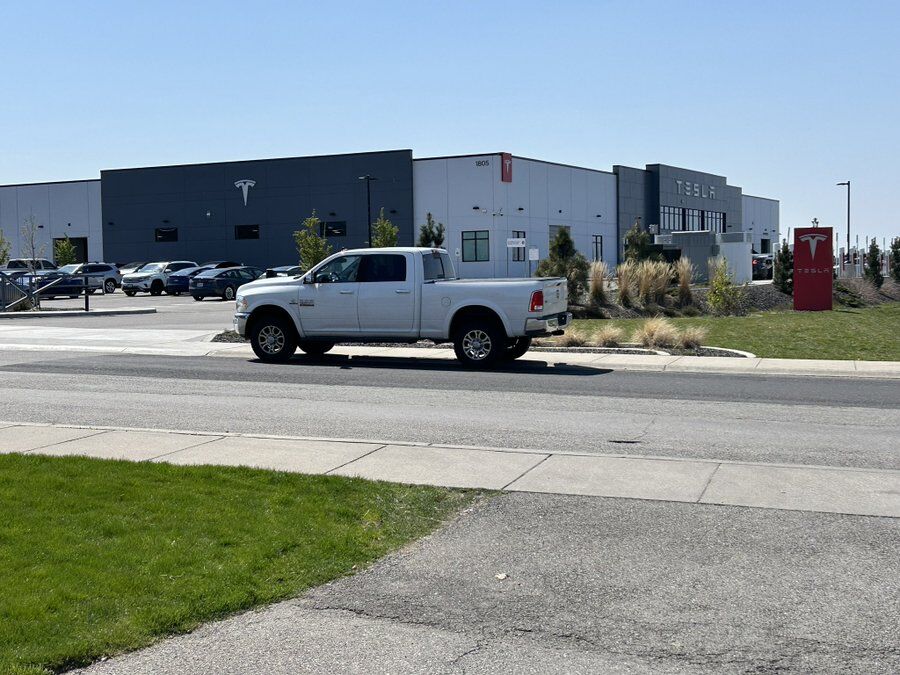
The legislation has sparked controversy, with some viewing it as politically motivated amid protests against Tesla. Evidence of these protests remains visible at the Tesla dealership in Liberty Lake, where demonstrators have expressed opposition to Elon Musk.
“I think it’s unconstitutional to target one company for taxation,” said State Rep. Jeremie Dufault, who strongly opposes the bill.
Dufault warns consumers will ultimately bear the financial burden of the tax. “It will raise some revenue, theoretically, but really, that’s just will end up raising the cost of electric vehicles because that tax will just get passed on directly to people who are purchasing electric vehicles,” he explained.
Tesla is currently a larg seller of ZEV credits in Washington, and Fitzgibbon acknowledged Tesla would be the only company required to pay this tax at present. Despite this, he maintains the revenue would benefit Washington residents.
“A portion of that money would better serve Washingtonians if it was spent on these other purposes,” Fitzgibbon said.
The bill passed the House during early morning hours on Wednesday and now moves to the Ways and Means Committee before heading to the governor’s desk.
If enacted, HB 2077 is projected to generate approximately $77 million for the Washington State Department of Revenue by 2027.
COPYRIGHT 2025 BY KXLY. ALL RIGHTS RESERVED. THIS MATERIAL MAY NOT BE PUBLISHED, BROADCAST, REWRITTEN OR REDISTRIBUTED.