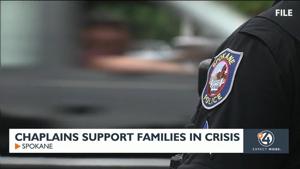
They wear SPD badges on their shirts, but Mickey Tuter and Kevin Piatt are not Spokane police officers. They serve as police chaplains, providing crucial support during some of life’s most devastating moments.
“It’s definitely a calling,” says Tuter, who has served as a chaplain for 20 years. His colleague, Piatt, joined the program six years ago with a similar sense of purpose.
“Every call is a divine appointment,” Piatt explains, describing the gravity of their work.
Tuter and Piatt are the only two paid chaplains in Spokane, part of a program now celebrating its 45th anniversary. They work alongside 18 volunteers, all performing a challenging but essential role in the community.
Their primary responsibility is responding alongside officers to every unattended death in the city.
“That could be overdose, that could be a natural death, that could be suicide, could be even homicide,” Tuter explains.
In these moments of crisis, the chaplains provide what Piatt calls “a ministry of presence” for families experiencing sudden loss.
“We’re there for that family at that moment and within that context then we know that sometimes we may feel like we’re ineffective, but we’ve been that ministry of presence. The family knows we’re there. If they have questions, they can ask us,” says Piatt.
The chaplains guide devastated families who are often unprepared to make immediate decisions and arrangements following the death of a loved one. This emotional support fills a critical gap, allowing officers to focus on their investigative duties while ensuring families aren’t left alone in their grief.
Day after day, death after death, the work takes its toll on the chaplains themselves.
“Usually, the breakdown comes afterwards,” Tuter admits, acknowledging the emotional weight of their calling.
To cope with the constant exposure to trauma, the chaplains rely on several resources: their faith, professional therapists, and each other. However, Tuter says they’re often more concerned about the wellbeing of the officers they serve alongside than their own emotional health.
“Our officers do a very, very difficult job in seeing so much trauma,” Tuter explains. “The average person has maybe three or four traumas in the lifetime, and these officers can literally go from three traumas in a row and try to go home and kind of be normal.”
The challenge of compartmentalizing such experiences is immense, according to Tuter. “That just isn’t really possible for first responders because of the trauma they see on a day-to-day basis.”
The chaplaincy program operates as a nonprofit, funded primarily through donations, with police officers themselves being among the biggest contributors. This financial support allows the chaplains to continue their vital work in the community.
While the chaplains come from Christian backgrounds, they emphasize that their services are available to everyone, regardless of faith tradition. Both Tuter and Piatt stress that they don’t push religion on anyone they assist.
Though it is a faith-based organization, the chaplains provide the same level of care and compassion to all community members—from atheists to Wiccans and everyone in between—without discrimination based on religious beliefs.
If you are interested in supporting the chaplaincy program or learning more about their services, click here.
COPYRIGHT 2025 BY KXLY. ALL RIGHTS RESERVED. THIS MATERIAL MAY NOT BE PUBLISHED, BROADCAST, REWRITTEN OR REDISTRIBUTED.