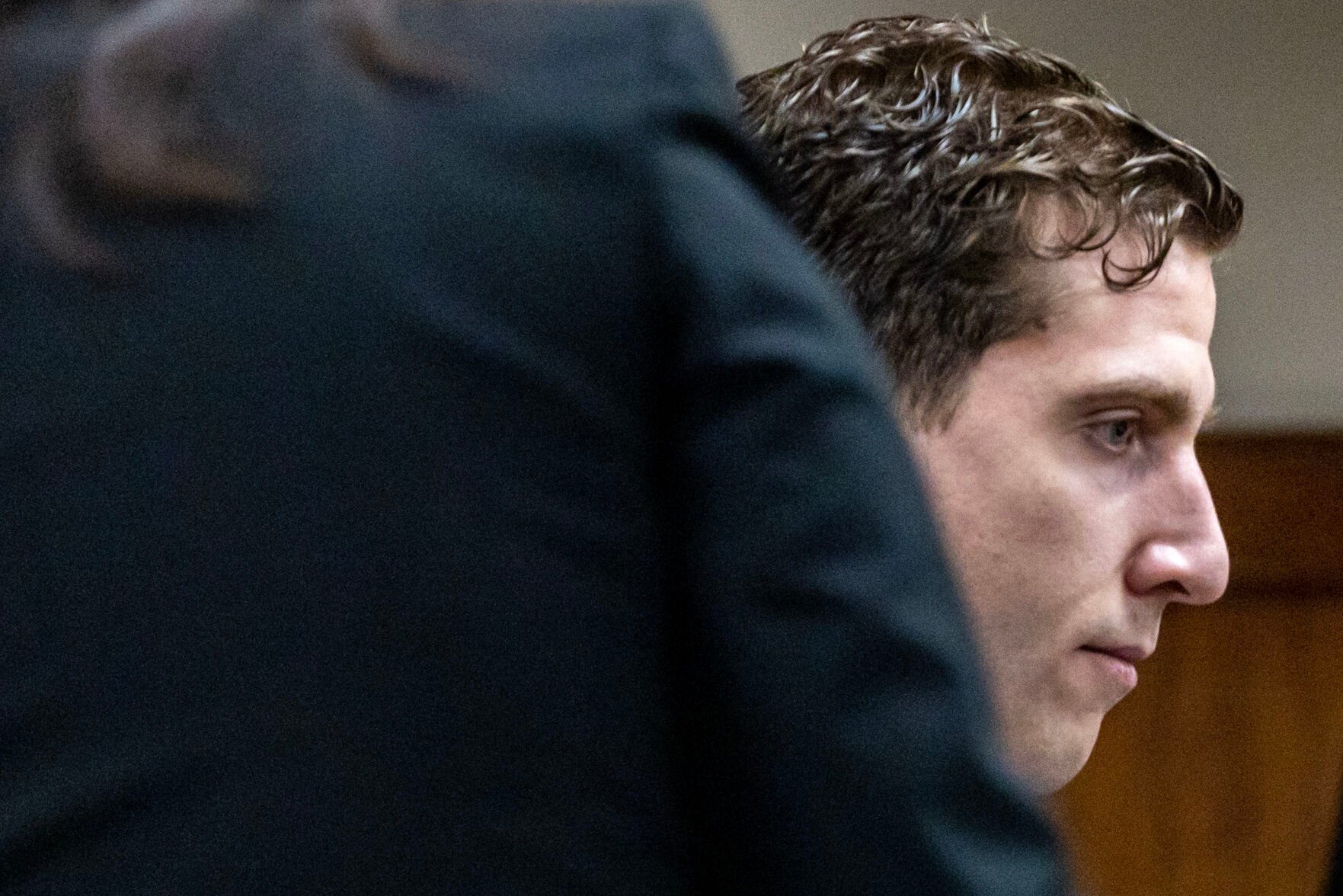
BOISE, Idaho – The man accused of killing four University of Idaho students in 2022 should not face the death penalty, his attorneys say, because he has psychological impairments that would make execution unconstitutional.
They also say his mannerisms in court would likely prejudice the jury against him.
Bryan Kohberger is accused of killing Kaylee Goncalves, Ethan Chapin, Xana Kernodle and Madison Mogen.
Court records recently filed in Ada County show the defense plans to show that Kohberger has autism spectrum disorder and should not be subject to the death penalty.
The defense contends that Kohberger and others with this disorder have intellectual disabilities and that it would be unconstitutional to sentence him to death.
Attorneys reference a comprehensive neuropsychological exam done on Kohberger in which they say the doctor found he “continues to exhibit all the core diagnostic features of ASD currently, with significant impact on his daily life.”
The report cites that Kohberger has displayed “lifelong deficits in social-emotional reciprocity, including ‘limited perspective-taking’ and ‘limited sharing of affect/emotions of others.'”
The doctor also noted Kohberger’s compulsive actions, such as hand-washing and other cleaning behaviors.
More than 28 pages, the defense cites other reasons why someone with ASD should not be subject to the death penalty, including diminished ability to assist counsel in their defense.
“Mr. Kohberger displays extremely rigid thinking, perseverates on specific topics, processes information on a piece-meal basis, struggles to plan ahead, and demonstrates little insight into his own behaviors and emotions,” the defense writes. “No matter how helpful Mr. Kohberger may wish to be, it is simply not possible for him to aid counsel in a way that someone without the deficits accompanying ASD would be able to.”
The defense also says Kohberger’s behavior in court could create an “unwarranted impression of lack of remorse.”
“Mr. Kohberger’s ASD manifests in many of these highly prejudicial, but completely involuntary, mannerisms,” the defense writes. “Dr. Orr observed that he subtly rocks his upper torso, especially while engaged in a cognitive task or listening to someone else—both of which are almost certain to occur during his trial.”
While any hint of Kohberger’s disability has not been talked about in open court or in court filings, the defense claims it’s been a source of media scrutiny since the beginning.
Filings reference “Mr. Kohberger’s social deficits, particularly as they relate to his interactions with women” because someone told NBC News his behavior at a brewery was “creepy.”
They also cite a New York Times story in which female students at WSU where Kohberger was in the criminology program said he made them feel uncomfortable.
“If true, these allegations can easily be explained by Mr. Kohberger’s ASD: given their difficulty interpreting social cues, people with ASD may misconstrue social niceties as romantic interest,” the defense says.
Kohberger is scheduled to stand trial in August. If convicted, the death penalty phase would begin immediately after.
COPYRIGHT 2025 BY KXLY. ALL RIGHTS RESERVED. THIS MATERIAL MAY NOT BE PUBLISHED, BROADCAST, REWRITTEN OR REDISTRIBUTED.