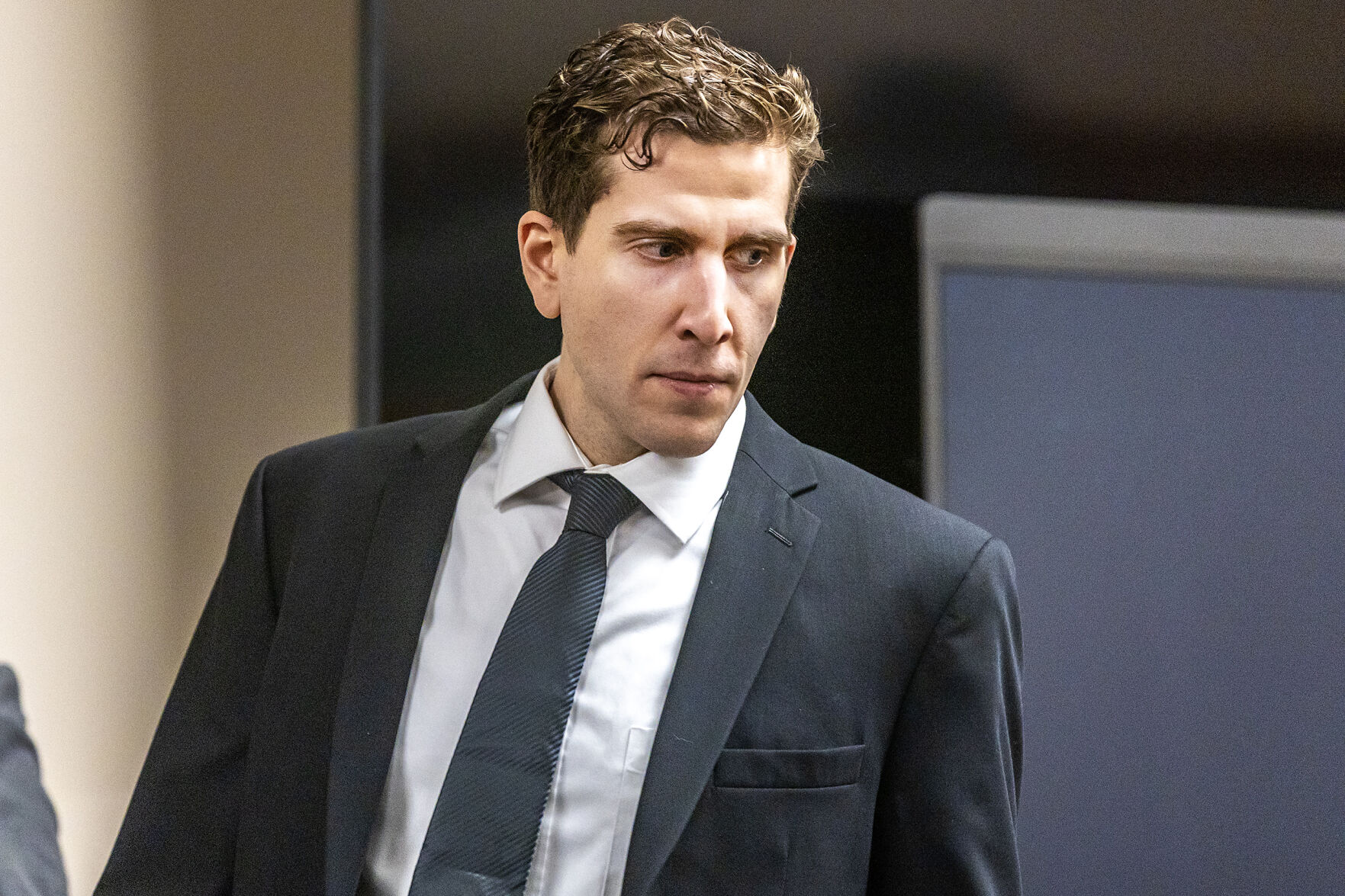
BOISE, Idaho — A judge has denied motions to dismiss evidence and search warrants related to the trial of suspected University of Idaho quadruple homicide killer Bryan Kohberger.
Kohberger’s defense team has been pressing for months to have search warrants related to his cell phone data, his family’s home, genealogy and much more dismissed, arguing police omitted information from the court to obtain the warrants, and some of the police’s methods violated Kohberger’s constitutional right to privacy.
The court documents released by Judge Hippler’s decision to reject every motion put forth by Kohberger’s team shed more light on details leading up to his arrest.
On December 30th, 2022, a team of snipers were set up scouting the home from the outside, as a helicopter monitored from above. All of them watching Kohberger’s moves.
Police had three warrants ready to go to search Kohberger’s person, his Hyundai Elantra and his parents’ home.
The snipers in place watched Kohberger, dressed in black, moving around the home at around 12:30 that night. Police saw him go to the garage where his car was parked, and return to the kitchen wearing rubber gloves and holding a plastic bag.
Police believed in that moment there was a chance he was destroying evidence. Police also had information that Kohberger had access to a Glock.
All of this prompted police to move in and serve the warrants. When arresting Kohberger, he told officers there was an unloaded gun in the home by his bed.
Kohberger’s defense team fought to have any evidence obtained from those warrants tossed from the case, arguing his rights were violated because police did not execute a “knock-and-announce” before breaching the home; a move that legally requires police to knock on a door, announce their presence and wait a reasonable time before entering the home.
But per Pennsylvania law, where Kohberger was arrested, if police believe a suspect is destroying evidence and poses a threat to law enforcement, officers do not have to knock and announce themselves.
Based on Kohberger’s access to a firearm, and what snipers were witnessing, Judge Hippler ruled police were justified in omitting that procedure.
All evidence related to those search warrants will remain in the case.
On top of trying to dismiss evidence, the defense also challenged the credibility of the surviving roommate who was in the home where the murders took place.
Kohberger’s team argued that she gave inconsistent interviews to police related to what she saw and heard the night of the murders and police failed to share that with the court.
Defense attorney Anne Taylor accused the roommate of not disclosing everything to all officers involved, including telling one officer, but not another, that she saw a man carrying a vacuum-type object the night of the murders and that she thought it was her friend Kaylee Gonclaves she heard running down the stairs at 4 a.m.
“Credibility is really important when this person was relied on in the investigation,” Taylor said previously in court.
The defense also argued that police intentionally did not share how the roommate told them her memory was “fuzzy” and “cloudy.”
Court documents revealed the roommate told police, “I believe I was also very drunk. I don’t know how much of this is real.” She later told police, “Half this stuff, I don’t know if it’s a dream or if it’s real. I just have no clue.”
Judge Steven Hippler ruled the roommate’s statements were reliable, saying:
Despite the fact that she claimed her memory was fuzzy or that she felt like it was a dream or that she was still intoxicated, even if her reliability were in question, there was other evidence that corroborated her account.
Judge Hippler said it would be no surprise that any person experiencing what the roommate went through would be shaken by what happened and would have questioned the reality of what they perceive. He said this does not make her unreliable.
No evidence or search warrants have been tossed from the case. The trial is still expected to start this summer in Boise.
COPYRIGHT 2025 BY KXLY. ALL RIGHTS RESERVED. THIS MATERIAL MAY NOT BE PUBLISHED, BROADCAST, REWRITTEN OR REDISTRIBUTED.