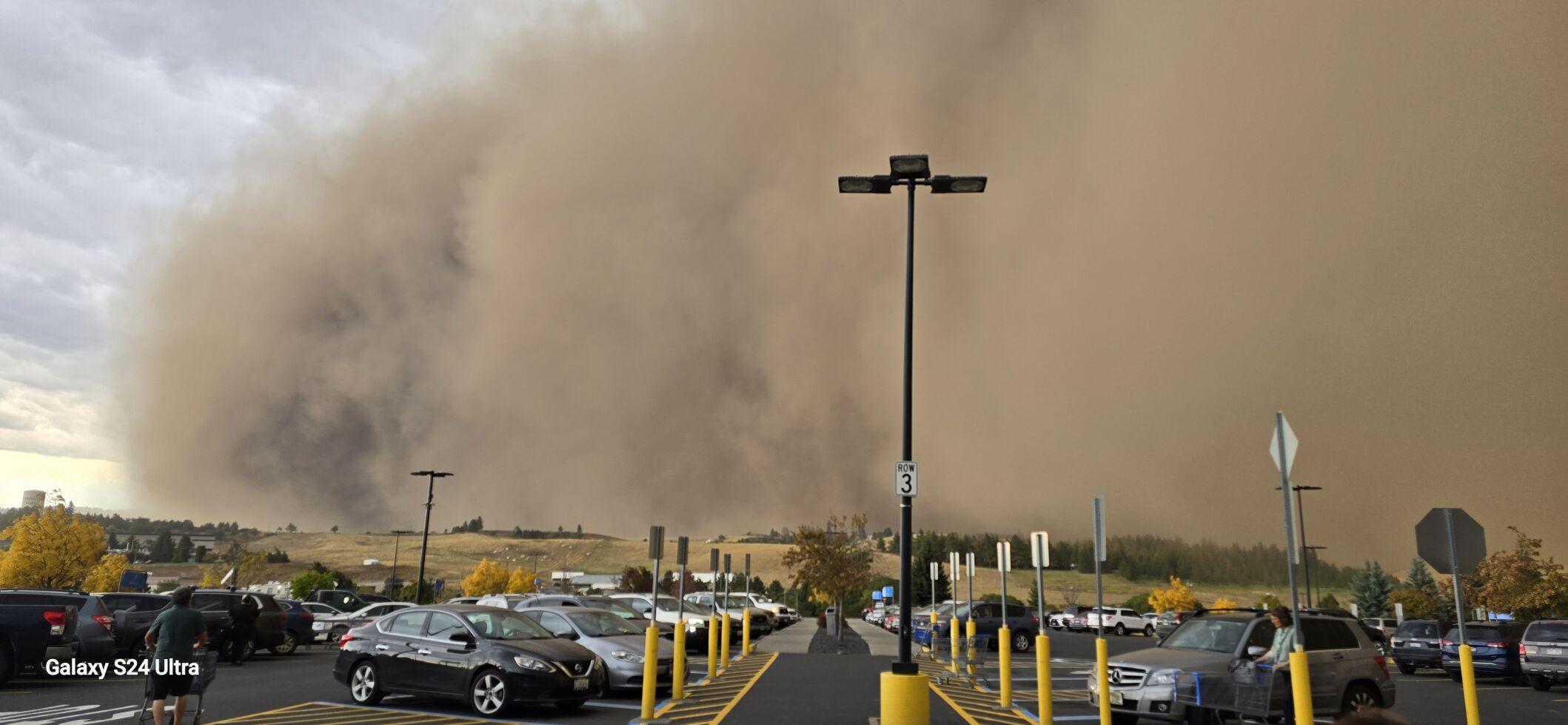
SPOKANE, Wash.– Walls of dust swept across the Inland Northwest on Wednesday evening like a scene from an action movie. As quickly as they appeared, they were gone, but these types of weather events are not rare, nor are they free from danger. Here’s what you need to know to be prepared for the next dust storm.
Dust storms like what happened on Wednesday begin with strong thunderstorms blasting winds down across parched farmland. Soil moisture is particularly low right now in the region, and recent harvests and winter plantings have broken up the soil to a point where it’s easier for the wind to carry it away.
These thunderstorm winds kick up the dirt and carry it with them as they spread out ahead of the thunderstorms. The more severe these storms are, the stronger their gust front will be and the more dirt and dust they are likely to transport.
When the dust is particularly dense, the National Weather Service will issue a Dust Storm Warning. This means visibility within the dust cloud is less than one-quarter of a mile. If you are driving on the highway at the speed limit, that means you will have only a few seconds at best to react to what’s happening on the road in front of you. In some cases visibility within dust storms can drop to almost zero, just as bad or worse than dense fog or a whiteout snow squall. It can be extremely dangerous to be on the road during a dust storm. That’s why alerts sent to cell phones across Spokane County on Wednesday recommended people pull over until the storm passed.
Dust storms will also suddenly drop air quality and cause stinging, burning eyes. In addition to the risks of the dust itself, they can be a sign of severe winds which can knock over trees and power lines. A Dust Storm Warning is a signal to take cover inside, even if the main threat to people who are not in their cars doesn’t come from the dust itself.
Thankfully, dust storms usually only last for a few minutes before visibility improves and winds calm down. By taking a couple of minutes to play it safe, this type of weather can become a small inconvenience instead of something more dangerous.
COPYRIGHT 2024 BY KXLY. ALL RIGHTS RESERVED. THIS MATERIAL MAY NOT BE PUBLISHED, BROADCAST, REWRITTEN OR REDISTRIBUTED.